

For too long, endometriosis has been perceived solely as a gynecologic disease. "For decades, women have been told their pain was in their head," stated Dr. Frank Chervenak during his opening remarks at the Endometriosis Foundation of America's 17th Annual Medical Conference and Patient Day. "Women's pain is systematically dismissed, a pattern rooted in gender bias in medicine that still persists, albeit to a diminishing degree."
The annual EndoFound meeting took place from March 6-8 in New York City, bringing together physicians, surgeons, researchers, and patients to reframe endometriosis as a nerve-centric disease that extends beyond the pelvis.
Endometriosis 2026: A Nerve-Centric Disease
Nearly 200 individuals attended this year's Medical Conference, which was the first to position the nervous system at the center of endometriosis biology and surgical care. “This year's theme—endometriosis as a nerve-centric disease—was a deliberate repositioning of how we, as a medical community, understand and teach this condition,” said EndoFound cofounder Dr. Tamer Seckin. "There is a direct connection from the spinal cord to the uterus and all the way to the brain. This is an alternate pathway that is rarely appreciated."
Over two days, presenters explored endometriosis as a nerve-centric disease and discussed key scientific and surgical advancements. The common thesis among all presentations was the acknowledgment that endometriosis pain is complex and experienced differently by each individual.
Key topics included:
• The risk of cancer development in deep infiltrating endometriosis associated with specific genetic mutations
• The potential role of vagus nerve stimulation as a novel treatment approach
• The importance of a multidisciplinary approach to endometriosis care
• Preoperative mapping of pain and pelvic organ function
• Neuroangiogenesis, or the growth of new nerves and blood vessels within deep lesions
Excision surgery was extensively discussed, as it remains the gold-standard treatment for endometriosis. However, not all practitioners are trained to perform this surgery. “For too long, endometriosis has been defined primarily by its gynecologic characteristics, while its neurological dimensions have been largely overlooked,” Dr. Seckin added. “The nerve-centric framework has profound implications for how we approach diagnosis, surgical planning, pain management, and ultimately, patient outcomes. Bringing this science to the forefront of a patient-facing conference was itself a statement: that our patients deserve access to the most current, most rigorous thinking in the field, not a simplified version of it.”
To enhance surgical technique and precision, Dr. Seckin highlighted his "you only look once (YOLO)" approach and aqua blue contrast technique, which improve visualization of endometriosis, including the smallest lesions, throughout the body and result in reduced post-operative recurrence.
Mapping Pain: Pelvis to Brain
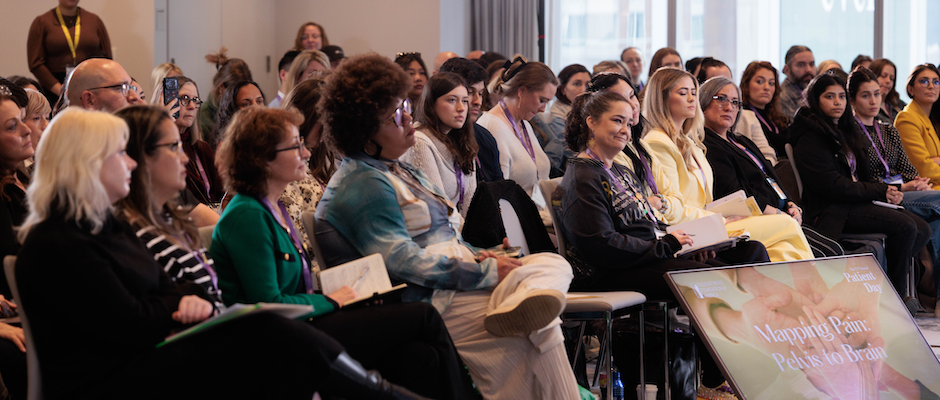
Patient Day brought together over 200 attendees in person to address endometriosis as a neuroinflammatory condition. Presentations from physicians, patients, caregivers, and advocates ranged from educational to practical, offering attendees a deeper understanding of the biological mechanisms driving the disease, validation of postoperative pain experiences, and strategies for managing daily life.
Sessions focused on:
• Novel research into the genetics of endometriosis and how patients can get involved
• The importance of preoperative mapping using patient history and imaging to guide treatment and set realistic expectations
• Advocacy for change at state and federal levels
• Tools for managing nutrition, sleep, movement, and mental health
Several patients, including Nicole Notar, Melissa Diamond, Latia Lee, Valerie Menard, Autumn Weimann, and Savannah Regensburger, shared their personal experiences with endometriosis, illustrating the various ways the disease impacts individuals differently.
A highlight of the day was the keynote address by author Cat Bohannon, who provided insight into the role of women in human evolution. After her talk, she engaged with attendees and signed copies of her book, Eve: How the Female Body Drove 200 Million Years of Human Evolution.
However, the most meaningful aspect of the day was the connections made. "There's something to be said about the vulnerability it takes to attend an event like this, ask questions, share stories, and connect with others, especially if they don't know anyone else there," said Carolyn Mayer, director of community health programs for EndoFound. "I want people to leave feeling equipped with more tools and connections, and if they can have a bit more hope about the positive updates and work happening in research, that's fantastic."
Dr. Seckin agreed, adding just how critical it is to patient care to bridge the gap that exists between clinicians, surgeons, and researchers and the patients they treat. “This gap is why we created both Patient Day and Medical Conference, where surgeons attend the former, and patients the latter. This year we saw the absolutely necessary convergence of the two, reflecting exactly the kind of collaboration this foundation was built to foster."