

For most of my life, I thought my pain was normal—the kind of thing women are told to tough out: cramps, fatigue, the constant ache that others dismiss as being “in your head.” It took years (and more doctor visits than I can count) before I read the word endometriosis and realized that the pain wasn’t normal at all.
Even now, what hurts almost as much as the condition itself is how invisible it can feel—both clinically, and also in storytelling. When I was younger, I searched bookshelves for characters like me; people balancing ambition, love, and hope while their own bodies waged quiet wars. For a long time, I couldn’t find anything.
But this is starting to change. More authors are writing stories that don’t shy away from the reality of endometriosis, from the pain, the isolation, the resilience, and the small joys we carve out between flare-ups. These books don’t always get it perfect, but each one feels like a piece of truth and makes me feel just a little more seen.
In these eight novels, endometriosis is part of the full story and not used merely as background detail. These works—spanning romance, literary fiction, and nonfiction, too—validate the emotional and physical realities of life with chronic pain.
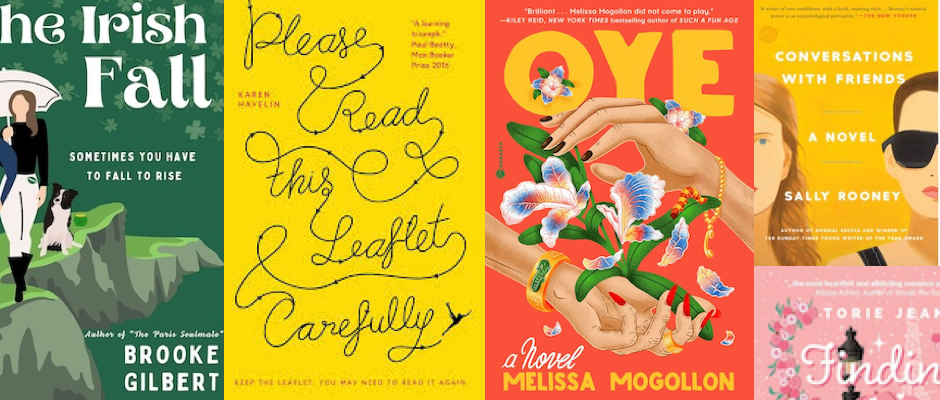
Finding Gene Kelly by Torie Jean
Evie O’Shea has spent years managing the relentless pain and exhaustion of endometriosis while chasing her dreams in Paris. When she strikes a fake-dating deal with her childhood nemesis, Liam Kelly, to survive her brother’s wedding, she’s forced to confront how her illness has shaped her ambitions, family dynamics, and ability to love.
Torie Jean doesn’t use endometriosis as a mere subplot—it’s integral to Evie’s identity. Readers see the daily calculations, flare-ups, and emotional toll that come with living in a body that doesn’t cooperate. Finding Gene Kelly is both a heartfelt romance and an act of representation for readers who rarely see their pain acknowledged.
Please Read This Leaflet Carefully by Karen Havelin
Told in reverse chronology, Karen Havelin’s Please Read This Leaflet Carefully follows Laura Fjellstad, a woman living with chronic illness, motherhood, and isolation, back through her twenties and teens. The story unfolds like a medical history in reverse, exposing years of
misdiagnoses, fatigue, and frustration with a healthcare system that fails to understand women’s pain.
The book’s fragmented timeline mirrors the disorientation of illness and challenges the reader to rethink what progress and healing mean. Havelin’s prose is raw and intimate, offering an unflinching portrait of what it’s like to live with endometriosis every day.
The Irish Fall by Brooke Gilbert
When Eyre travels to Ireland in search of renewal, she carries with her the exhaustion of chronic illness—both Crohn’s disease and endometriosis. Brooke Gilbert’s novel explores how pain and fatigue shape identity and the courage it takes to pursue joy even when the body resists.
This story blends travel, romance, and recovery in a way that shows chronic illness doesn’t have to erase hope or adventure, but it does change how we navigate them.
Broken Parts Included by Alyson Root
Lydia Archer has lived for years with unexplained pain, exhaustion, and dismissal by doctors—experiences that will be achingly familiar to anyone with endometriosis. When she meets Halle, her sister’s best friend, Lydia finds someone who sees beyond her illness and helps her believe she deserves care, love, and rest.
Root gives readers a tender, queer love story grounded in medical realism. Rather than centering a cure, the narrative celebrates adaptation, emotional connection, and self-acceptance.
All Your Perfects by Colleen Hoover
Quinn and Graham’s marriage oscillates between hope and despair. Problems arise not from external villains, but from the strains of infertility, secrets, and misunderstanding. Quinn’s endometriosis (and how it affects her fertility) becomes a crucial force pushing them apart—and perhaps, (if they fight for it) to bring them back together.
Hoover brings infertility to the foreground of this couple’s romance, making readers confront how reproductive health can destabilize identity and relationships.
Speech and Debacles by Heather DiAngelis
Teen Taryn Platt joins the Speech and Debate team, hoping to find confidence, connection, and her voice. But painful, crippling cramps threaten to derail her performance and aspirations, as well as complicate her budding chemistry with Riker, a competitor with his own insecurities.
DiAngelis doesn’t shy from showing how pain interrupts ambition, flirtation, and visibility. The story acknowledges depression, social anxiety, and chronic illness, portraying each not as melodrama, but reality. For readers in younger age groups, Speech and Debacles is an accessible entry point into fiction that tackles endometriosis, particularly in demonstrating how chronic pain can deeply impact identity even before adulthood.
The Scorsolini Marriage Bargain by Lucy Monroe
This romance novel stands out in the genre for weaving endometriosis into its emotional arc. The heroine’s chronic pain and infertility struggles drive key decisions about love and family. Monroe treats her protagonist’s condition with empathy, exploring how illness reshapes intimacy and the definition of partnership.
Bleed: Destroying Myths and Misogyny in Endometriosis Care by Tracey Lindeman
Though technically nonfiction, Tracey Lindeman’s Bleed storytelling reads with the vividness of fiction. Lindemand explores systemic medical neglect, gender bias, and the cultural silencing of pain, all themes that resonate across fictional portrayals of endometriosis.
For readers of fiction about illness, Bleed provides the context that many novels gesture toward but don’t fully unpack, particularly the history of disbelief surrounding women’s bodies and the need to rewrite those narratives.
Oye by Melissa Mogollon
While Oye does not explicitly center on endometriosis, it’s worth including for comparison and contrast, and because it shows how family health crises are handled in fiction with sensitivity. In Oye, Luciana, a Florida high-school senior, is thrust into the role of caretaker for her
grandmother Abue, whose health is suddenly in crisis when a mass is found in her gallbladder during the chaos of a hurricane.
The novel is structured as a series of phone calls from Luciana to her older sister. Among themes of intergenerational trauma, the difficulty of caregiving, and navigating medical uncertainty, Oye gives readers a sense of how the impact of family illnesses ripple outward.
The way Mogollon writes about endometriosis as more than just a medical condition—including how people respond, who they become in the face of health crises, and what gets sacrificed—is relevant to the experience of many with chronic and reproductive illnesses.
Why These Stories Matter
Across genres, these novels share several truths:
● Pain is not invisible when told honestly. Fiction gives readers access to internal realities that medicine too often ignores.
● Mental and emotional impact: The difficulties of living with endometriosis is not solely about physical symptoms; mood swings, limitations on life plans, identity questions, shame, self-esteem issues, fear around fertility, etc., are critical to include in any realistic depiction of the disease.
● Diagnosis and dismissal are part of the emotional terrain. Almost all fictional portrayals echo what many endometriosis patients report in real life; that symptoms are dismissed, doctors don’t listen, and pain is normalized. This is a valuable part of representation because it can validate readers’ frustration and experiences.
● Endometriosis intersects with identity, love, and ambition. These stories show that illness is never the whole story, but it always shapes the story of someone with the disease. Many novels also use endometriosis as a factor in romantic plotlines. This can be powerful for showing how partners can support (or fail), how characters navigate desires for children, intimacy, or the fear of being a burden.
● Healing, hope, agency. For readers living with endometriosis, seeing characters who endure—all while loving, creating, and hoping—can be profoundly validating. The more satisfying works balance the challenges with agency, brought to life with characters seeking help, making choices, being heard, building meaningful relationships, and sometimes accepting that healing might be nonlinear.
Fiction that depicts endometriosis is still relatively rare, but its presence is growing. Authors like Torie Jean, Karen Havelin, and Sally Rooney are making space for chronic pain in literature, and in doing so, they’re helping readers and writers alike see that every story, no matter how painful, deserves to be told.