

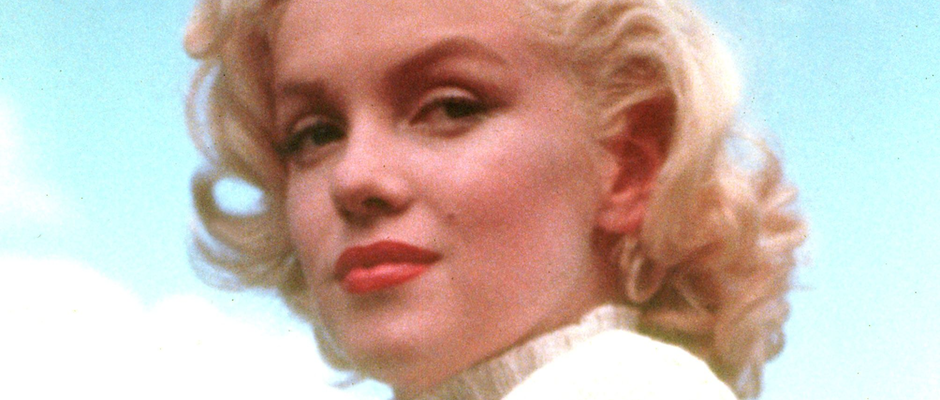
June 1, 2026, marks what would have been Marilyn Monroe’s 100th birthday. Even sixty-four years after her passing, her image endures: the billowing white dress on a windy subway grating, her platinum blonde curls, and the coquettish smile that defined an era of Hollywood glamour. However, a vital part of her story often remains in the shadows: her silent battle with endometriosis.
Despite being a pop culture icon, Monroe was often characterized by complicated behavior on set: chronic lateness, reliance on pain medication, and unpredictable mood swings. This behavior was frequently attributed to professional entitlement or emotional instability; however, historians and biographers believe that endometriosis was the underlying cause.
Endometriosis: The “Career-Woman’s Disease”
Currently, an estimated 1 in 10 women and individuals assigned female at birth in the United States live with endometriosis; however, the prevalence in the early-to-mid 1900s remains unclear.
According to Dr. Danielle Luciano, a minimally invasive gynecologic surgeon and Chair of the Department of Obstetrics and Gynecology at UConn School of Medicine and UConn Health, during the 1950’s and 1960’s, “endometriosis was recognized as a disease that caused pain and infertility and was associated with tissue resembling the endometrium growing outside the uterus.”
For centuries, endometriosis and other women’s health issues were shrouded in shame and medical ignorance. Women often faced diagnoses of a “wandering womb” or hysteria when they complained of pelvic pain, infertility, or severe menstrual issues.
At the time, endometriosis was directly tied to a woman’s reproductive capabilities. Dr. Joseph Vincent Meigs famously stated in 1953, “Avoidance of endometriosis through early marriage and frequent childbearing is the most important method of prophylaxis.” Based on Meigs’ flawed theory, endometriosis was subsequently labeled a "career woman’s disease" during the 1950s and 1960s.
Monroe reportedly suffered from chronic pelvic pain, severe menstrual pain, and fertility issues—all known symptoms of endometriosis. Biographer Anthony Summers detailed her experience with the condition in Goddess: The Secret Lives of Marilyn Monroe, noting that “the condition was so severe that it destroyed her marriages, her wish for children, her career, and ultimately her life.”
In The Many Lives of Marilyn Monroe, author Sarah Churchwell wrote that Monroe’s pain was so intense that she included clauses in her contract to protect her from working during menstruation.
Over the years, Monroe underwent several procedures, including gallbladder removal and multiple endometriosis surgeries, without the benefit of modern surgical precision.
Her Silent Battle with Endometriosis
Why is endometriosis so often overlooked in narratives about Monroe’s life? The answer likely lies in the intersection of Hollywood and gender bias. “Women's health and pain have historically been ignored, so it would not have been something people discussed publicly during Monroe’s lifetime,” said Dr. Luciano.
This is partly because Monroe was marketed as the ultimate sex symbol—a picture of health, vitality, and effortless beauty. Admitting that she frequently doubled over in pain, bled excessively, or struggled with infertility would have tarnished that image. Additionally, it is reported that studios pressured her to work through the pain, and when she couldn’t, she was branded as unreliable or “crazy.”
In a recent interview with PEOPLE, Bryan Johns, President and CEO of the ICON Collection, elaborated on the negative impact that endometriosis had on Monroe’s career. “She had terrible, debilitating endometriosis and was hospitalized and under medical supervision for that condition throughout her life. Although she had communicated her health issues to the studio, oftentimes the studio would refute this and accuse her of making it up in order to try and keep her under their control,” Johns told PEOPLE in an article published on May 6, 2026.
Monroe’s desire for children was also thwarted by the disease. She suffered at least three well-documented miscarriages, including an ectopic pregnancy in 1957. In the 1950s, miscarriage was a taboo subject, often seen as a private failure of the woman rather than a medical tragedy. The grief from these losses, compounded by the physical toll of endometriosis, likely contributed to her mental health and substance use issues later in life. Monroe wasn’t just a “tragic blonde”; she was a patient with a chronic condition who was failed by the medicine of her time.
The Evolution of Endometriosis Care: From Marilyn to Today
If Marilyn Monroe were a young actress today living with endometriosis, her journey would look vastly different. The evolution of diagnosis and treatment since the 1960s has been remarkable, though the disease remains a challenge. Key advancements made over the past several decades include:
-
Laparoscopic Excision Surgery: In Monroe's time, doctors needed to perform invasive surgeries to find endometriosis. Today, the gold standard for diagnosis and treatment is laparoscopic excision surgery, which uses small incisions and high-definition cameras. "Laparoscopic treatment for endometriosis didn't become common until the 1990s," said Dr. Luciano. "In the 2000s, robotic-assisted laparoscopy made minimally invasive treatment even more advanced and precise, allowing surgeons to see in higher definition and 3D during surgery."
-
Early Intervention: Although there remains an average delay of 7 to 10 years from the onset of symptoms to receiving an endometriosis diagnosis, there is now a growing movement toward early suspicion of the disease based on patient symptoms and imaging.
-
Novel Treatment Options: While not a cure, modern medicine offers a range of treatment options—such as specialized birth control, GnRH agonists, and vagus nerve stimulation—that can help manage symptoms and slow disease progression, options Monroe never had.
Moreover, discussions around women's health and endometriosis have become more common now compared to Monroe's era. Celebrities like Padma Lakshmi, Lena Dunham, Halsey, Bindi Irwin, and Lili Reinhart have all publicly shared their debilitating journeys with the condition, raising awareness and validating the struggles of millions.
A New Way to Remember Marilyn Monroe
As we mark Marilyn Monroe's 100th birthday, it is time to shift the narrative about her story to include her battle with endometriosis. We should remember her not just for her breathy voice and iconic poses, but for her incredible fortitude. She filmed The Seven Year Itch, Some Like It Hot, The Misfits, and many other films while battling a condition that leaves many bedridden.
By acknowledging her endometriosis, we restore Monroe's agency. She becomes less of a victim of her own fame and more of a warrior who fought a silent, invisible battle within her body. Her legacy serves as a reminder that behind the glamour, millions of people are fighting battles we cannot see.