
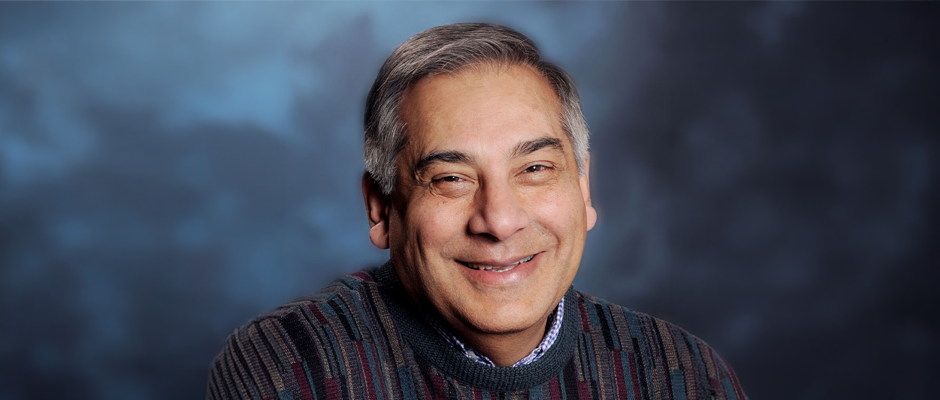
The Endometriosis Foundation of America mourns the passing of Professor Asgerally "Asgi" T. Fazleabas, PhD, a beloved member of our Scientific Advisory Board and one of the most consequential researchers in the history of endometriosis science. He died peacefully on May 29, 2026, surrounded by his family.
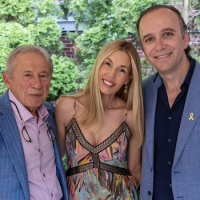
For those of us at EndoFound, Dr. Fazleabas was never just a colleague. He was a true friend to our community, to our mission, and most especially to Co-Founder Dr. Tamer Seckin, with whom he shared not only a deep mutual respect but a genuine affection built over many years of working side by side toward the same dream: a world where endometriosis is understood, treated, and ultimately conquered. “Dr. Fazleabas will be dearly missed,” Dr. Seckin says. “He was an exceptionally kind human being, a man whose intellectual generosity matched his scientific brilliance, and whose presence at our Medical Conferences elevated every conversation in the room year after year. It is rare to find such a person who lived his life with this much kindness and scientific aptitude. I am deeply in sorrow for his loss.”
A foundational figure in uterine biology, Dr. Fazleabas spent his career bridging laboratory discovery and clinical application—particularly in the areas of implantation failure and endometriosis. At Michigan State University, he earned the institution's two highest academic distinctions, University Distinguished Professor and MSU Foundation Professor, and developed the baboon model of endometriosis that allowed researchers to observe the disease's etiology and progression from its earliest stages. Work from his laboratory traced the epigenetic and gene expression shifts in the eutopic endometrium that endometriosis drives over time, advancing scientific understanding of progesterone resistance and the contributions of angiogenesis, microRNAs, and neurogenesis to the disease.
Dr. Fazleabas’s research, supported by the National Institutes of Health since 1986, held direct relevance for women struggling with infertility and for the broader effort to understand a disease that affects more than 200 million people worldwide. Over his career, he authored more than 240 peer-reviewed publications and was a recurring presence at EndoFound's Medical Conferences, where his presentations consistently moved the field forward.
But those who knew Dr. Fazleabas will remember him as much for who he was as for what he achieved. Beyond his remarkable scholarly accomplishments, he was known for his generosity and collaborative spirit, deeply committed to mentoring students, trainees, and faculty colleagues. He served as a bridge between generations of endometriosis researchers, generously offering his time, wisdom, and encouragement to emerging scientists around the world.
We extend our deepest condolences to Dr. Fazleabas’s wife, family, and the many trainees and colleagues whose lives he touched. His legacy lives on in every researcher he mentored, every patient whose diagnosis came sooner because of his work, and in the mission of the Endometriosis Foundation of America, a mission he helped realize.