

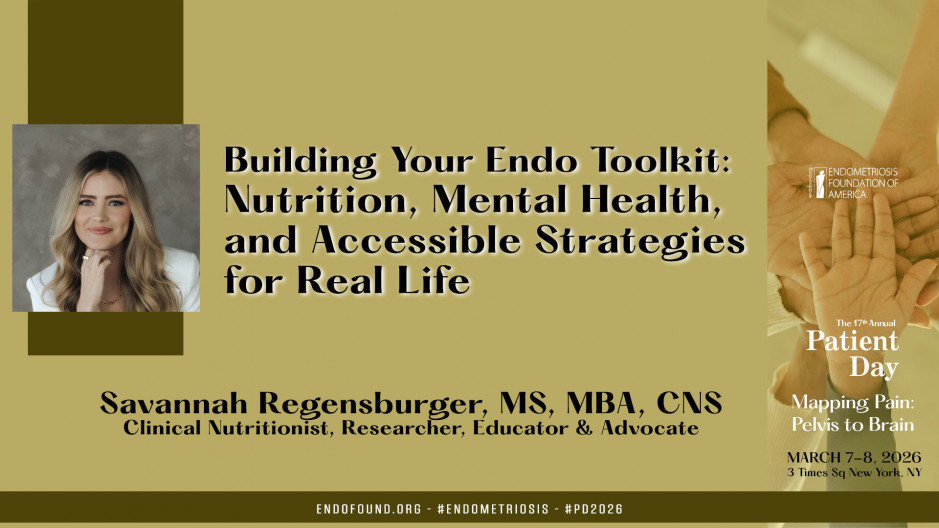
Patient Day 2026
Mapping Pain: Pelvis to Brain
March 7-8, 2026
3 Times Square, New York City
Hi everybody. I typically don't get very nervous when I'm speaking and that's not what I'm feeling. I feel like this butterflies, there's so much power in this room, right? It is, as we mentioned earlier, International Women's Day, and I could not think of a better day to do this to gather all of us together. I will say I feel the anger in the room, the confusion, the feeling of loss, and I just really hope that by the end of this day, we can come together, hug, feel validated in our differences really. And that's really what this conversation's going to be all about. So let's talk about me, my little Athenie. I grew up in small town, rural Colorado. Okay. This means I grew up a sick kid. I was always at the doctor, but this doctor did not know anything. Okay? I had my first period when I was eight years old.
I'm not eight years old there. That's just the only photo I could find it. I don't know, maybe like five or something. But I was young. I remember getting my very first period and thinking I was dying because you're not old enough yet to have the birds and the bees talk. You don't learn any of that. Couple of full circle moments for me here in this talk, but my mom is here and she always taught me to advocate for myself no matter what. And it started at eight years old for me. My very first love in life was softball. That was my dream. I wanted to go to college, play. That's all I wanted. That was my very first dream. That endometriosis ruined for me.
Ooh, yeah. Emotions. Okay. I was like, "I'm not going to get sad or anything." There they are. Okay. When things started to change, throughout high school, throughout my time as an athlete, I started to experience such chronic fatigue, constant bloating, UTIs. Gosh, the UTIs in big quotes there. Painful ovulations, far worse in my period. And then painful periods as well. Excruciating back and pelvic pain. I wanted to know why. On top of everything I was going through in my own world, I had my sixth traumatic brain injury from a car accident. And I just wanted to understand what was going on in my body because at that point, I couldn't play softball anymore. I was like, "I just need to know what's going on with my body, with my brain." I remember after that last concussion going into class and I'm sitting there listening to this lecture and I couldn't comprehend what she was saying.
Tried to write a word off the slide into my notebook. I still couldn't understand. I was so lost. I almost failed out of my first year of college because of endometriosis, undiagnosed and traumatic brain injuries. I graduated and it says right here, Bachelor of Science, this BS took a lot of nerve. That's a neuroscience joke.
Throughout my journey, I learned how important nutrition, hydration, movement, sleep, all of that was through my personal recovery and rehabilitation. I got my master's degree in medical nutrition because of that. And I was like, "This is it. I'm going to go to medical school. I want to help other women." And I took the MCAT. I started work in clinical trials at UC San Diego, primarily in oncology. And I was like, "Okay, let's apply. Let's do it. " Just kidding.That's not what happened. An unknown illness took my second dream from me. I had no idea what was going on, but throughout college, my pain continued, the inflammation continued. Here are some of the things that I was told. PMDD, a rare spine disease. Normal part of being a woman, I was a bad friend for canceling plans, BPD, celiac disease. That one, they got right. I do have that too.
And throughout this time, I had my friend Annie, I think she's watching virtually. Thank God, okay? The community is everything here. We have to come together. You have to lean on each other. We have to lean on each other in our experiences. I knew at this time, from my clinical experience, my education, I'm pretty sure I have endometriosis. And the crazy thing about this is any woman, person here who has endometriosis, we're not physicians, but you could look at another woman and be like, "Yep, that's endometriosis. Go to your doctor. You have it. " It's wild how we can start to see these symptoms. So Annie who had endometriosis, adenomyosis, interstitial cystitis says, "Okay, I'm going to give you some resources. Here's what we're going to do. " And another crazy full circle moment here, the top resource she gave me was EndoFound. And in the lowest point in my life, you could not have told me that two years later I'd be standing here with all of you on the endofound stage.
Okay. Let alone talking about endo is a nerve-centric disease. Endometriosis is where my life finally started to make sense. It is where my neuroscience background, my nutrition, work, research, lived experience all came together. And while I was diagnosed after almost 20 years, it was just the beginning of my story. At the time, I was educating online about nutrition, gut health, the brain-gut connection. And when I was diagnosed, I was like, "I don't think ... I don't know if I can share this. How do I post about this? " I was so afraid to become endometriosis. And I know I've heard that here today as well, and I totally understand the mentality to not want to become endometriosis, okay? But when I was trying to not become endometriosis, I started to lose myself because I didn't know how to help other women anymore. Those gut health issues, the brain fog, for literally 90% of my clients, I was like, "This is probably endometriosis." I had to talk about it.
So I decided if everything that I do is associated with fighting and educating on women's health ... Fuck it. I'm endometriosis and it's worth being known for because behind that word is all of us. It is a woman who fought for 20 years. It is women who have yet to get a diagnosis and maybe never will, but we're going to change that, okay? Because that's why we're here.
Okay. You guys had to get to know me a little bit, right? We're going to talk about nutrition, but big but. I want to take a moment for validation. The point here with talking about anything that we're about to talk about in what I call the endo toolbox is to increase body literacy, to understand your body, how endometriosis impacts you differently because as we've learned throughout these last three days, this impacts every single one of us differently. You may be able to go walk and run and I can't do that and that's okay, but we have to stop comparing our disease and just start learning from one another. I also want to validate that if you are somebody sitting in this room and you have tried the anti-inflammatory nutrition, pelvic floor, physical therapy, acupuncture, movement, hydration, sleep, everything, and you still are experiencing pain, I see you and your pain is real.
And I just want to validate that. Okay. We're just going to skip this slide because at this point we know that endometriosis is a full body, neuroinflammatory disease. Okay. It fully impacts hormones, immune system, full body impact. The gut is super cool. And if you're somebody who likes learning about the gut, learning about the estrobolome and how estrogen is metabolized in the gut is something really fun to dive into, so I highly recommend. But let's skip over that. Let's get to this cutest toolbox ever. Okay? My dad could never in his garage. This is what I call the endo toolbox. And I had to conceptualize something that was just more approachable for people struggling with this and just nutrition in general, but also life. Let me tell you a story to kind of give you an analogy here. So when I was a little girl, my dad was super handy.
He would fix things around the house and for some reason I was there and he'd be like, "Okay, go get me a screwdriver." So I'd go to the garage, I'd get him the screwdriver. Okay. Next day, go get me a drill. So I'd do that, bring it back to him. And then he'd say, "Okay, give me an Allen wrench." And that one was fun because I was like, "What is that and who is Allen?" I'm like, "I don't know what that is. " Point being, he's never used every single tool in his toolbox every single day, right? In no toolbox. I mean, anybody here who is handy and has used tools can probably agree with that. So I had to conceptualize that here in the fact that in our life, there is not a single perfect day. Okay. I do this for a living. I teach and educate on nutrition, on endometriosis, PCOS, women's health.
I have never in my life eaten a fully anti-inflammatory diet throughout that day, gotten perfect sleep, did my nervous system regulation, worked on my vagus nerve mindfulness, movement, soft friends and family, did acupuncture, pelvic ... No, there's not enough time in the day. I have never once done that. So the goal here is not perfection. It is figuring out which tools you need to pull out that day. Now we're going to talk about nutrition as one of the major tools here, because while you may be somebody who nutrition hasn't really helped your pain, there's a lot more to nutrition and what it does with inflammation in the body, and it can absolutely help us with longevity and long-term health here. I get asked all the time, Savannah, if I am not feeling like nutrition is helping me with pain, what's the point? Yeah, you're right.
What's the point? Why? Why would I keep doing this and having this restriction if I'm still going to be in pain? So we're going to talk about that. We're going to figure out why we still want to have quality foods in our life, not just for endo, but hopefully if you have the right tools, surgery, whatever it looks like, that you can have a better quality of life for longer so you can have a longer life.
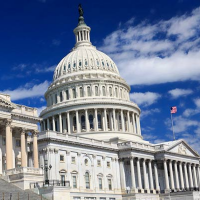
Let's talk a little bit about why the toolbox matters really quickly. A lot of people have talked about DC. A lot of us are going there next week. Okay. I have some pamphlets. My friend Emma and my friend Bailey and I put this together on social media. We used our socials and we just threw it out there and we said, "Hey, if you're a woman of endometriosis or you think you have endometriosis, please fill this out. We're going to take it, fold it up into a little brochure. If you want to see those, we have them and you can walk up to us after and we'll give you one." But we want to be able to take this to DC, take this to Congress centers and be able to give them numbers. Yes, it's a survey. It's anecdotal evidence, but pretty much everything with endometriosis up until this point is unfortunately.
So we surveyed about 1300 women and we asked them approximately how many years passed between your first symptoms and your diagnosis. Look at this. Over 50%, 10 plus years. Okay. Seven to nine years, 14%. There was, let's see, 3.2% that it took them less than one year. So the point here being, we are spending a lot of years of our life feeling horrible, not having tools, not having answers.
Were you ever told your symptoms were normal or just part of being a woman? I can only laugh at this one. 92.3%, yes. Over 90% of women said that they have been told this by a provider, that this was normal or it was just part of being a woman. This slide here were some of the symptoms that they've experienced. And I put these arrows here because while nutrition can impact a lot of these areas, these arrows are really pointing to the ones that we can really start to see some relief in our symptoms here. But these are really fun ones. Severe period pain, bladder pain, that's me. Fatigue, exhaustion, bloating, endobelly, infertility, anxiety and depression. We're here talking about the vagus nerve, right? The direct connection between the brain and the gut. Food matters here, not just for endo pain, but for full body health, for mental health, all of it.
Okay. Trigger warning here. I like to be very, very aware of everybody's backgrounds. We're going to do a brief slide on disordered eating and eating disorders and endometriosis. Okay. We're not going to dive fully into it, but I can't get on stage and talk to you all about nutrition and endometriosis if we don't talk about how much it impacts our relationship with food. These are some fun facts here, but essentially what we are seeing within research is endometriosis is associated with significantly higher rates of depression, anxiety, and eating disorders. And if you're somebody who's local or in Connecticut, I also am speaking at Yale's Mental Health Women's Mental Health Conference on April 17th. So if you want to learn more about endometriosis, the mental health impact, absolutely join that as well. But I have to speak to this because I have women come to me to come work with me and we start getting into nutrition and it becomes restrictive.
And I'm sure every ... Raise your hand if you've removed gluten from your diet. Okay. Dairy.
Sugar. Any processed foods, you went fully like raw, whole food diet. Yeah. Okay. What are you supposed to eat, right? You're like, "What's the point of eating? What am I doing here?" It leads to a bad relationship with food, disordered eating, and in many cases, eating disorders. Another main reason for focusing on nutrition is inflammation here. So we're here to talk about endometriosis, right? This is really the big bullet point here. We can talk about free radicals and oxidative stress and how inflammation is present in the body, but really we're learning lesions, increase inflammation, which is oxidative stress and more inflammation. So it's this continuous cycle. Estrogen plays a role. There's so much that contributes to our inflammation in our bodies. So if we can utilize anti-inflammatory nutrition to eat antioxidant rich foods, which are essentially what's attacking oxidation in the body. Oxidation, bad, it's creating a lot of inflammation in the body.
We take antioxidants and anti-inflammatory foods to try to combat that within the system.
And I have to say here as well, nutrition doesn't remove lesions, but for some, again, for some, big sum, it may help calm the inflammatory environment. Okay, six minutes. I'm almost done. I want to leave time for Q&A. Another big point here, I can't stand up here and tell you, eat fully whole food, anti-inflammatory, walk into your nearest whole foods and spend hundreds of dollars on foods and removing things from your diet. I can't do that. We have to talk about food security and real life barriers. Okay. Not everybody has access to the same foods and it's one more thing that we have to do with endometriosis. Again, going back to the toolbox, yes, it's great, but when I go to pelvic floor physical therapy, $200. When I go to acupuncture, $150. When I go to the grocery store, 300 bucks, if I'm trying to get like a week and a half to, a week and a half, let's be real, maybe a week.
It's just, it's expensive and it's really hard to budget. So if this pertains to you, I also want you to feel seen and hopefully validated. And I want to give you a tool when it comes to however it is that you're trying to eat. Let's talk about building a well balanced plate here. And these balances here can change and shift for a person, but overall, we want to focus on quality protein where we can. Fiber's a big one. We're here talking about the nerve and how also that connects to the gut, the gut microbiome. We need fiber. Fiber is the prebiotic to the probiotics, the healthy gut microbe within you, so we need to fuel it. Carbohydrates, we're so afraid of them, right? Probably some of us in this room are like, "When I eat rice, I feel terrible." It's about figuring out what works well for you.
Maybe it's rice. You can cook it in veggie, bone broth, something to help with digestion a little bit more. But ultimately here, figuring out the balance of your plate with protein, we're looking at about palm size portion of protein there, getting your carbohydrates in and fiber. Fats I don't have on here, but typically fats, especially if you're eating animal-based proteins, you're going to get it in. If you're cooking with oils, avocado, whatever that looks like, you're probably getting your fats in. If you're eating nuts, seeds, almond butters, you're probably getting fats in as well.
Okay. Longevity. Four minutes. Okay. As far as why anti-inflammatory nutrition matters here, again, this may not help your endometriosis pain. It's not going to cure your pain, but we want to live as healthy of a life as we can for as long as we can. So if eating healthy is also going to create this place for you to have longevity and healthier long-term outcomes, that's the goal with nutrition here. Okay? Okay. So with that being said, I just want to say how grateful I am to be in this room. As I said, full circle to be standing here on an endofound stage when my friend sent me the endofound research and the page when I thought I had endometriosis. I want to say that something is changing in the world of women's health, and I think and hope that with all of us being here, we can agree on that.
More women are sharing their stories, more women are sharing their scars, and more women are refusing to be dismissed into silence. And if I can just give you a little push, the way that we do this, and I get hundreds of messages from women on social media a day of, "How can I get involved? How can we make this change?" You can share your story even with one woman, if you can answer a survey, send letter out. The point here is that little girls with big pain grow into women who change the system. That's what we're doing together. Thank you.