

Patient Day 2026
Mapping Pain: Pelvis to Brain
March 7-8, 2026
3 Times Square, New York City
Good afternoon, everyone. Before I start talking about the essence of my work today, I want to address something that every person that has endometriosis knows that the pain is real. And what hurts just as much as the pain is how long it takes to be believed. And because of this, something starts to happen and change in the body. The body stops asking, "What is wrong with me? " And starts asking, "When is the next flare coming?" And this kind of anticipation, this waiting game, is the name of my talk, The Body on Guard. And so that's what it means when your body is constantly on guard. It is protecting, it is in survival.
Pain, repeated pain, again and again and again, starts to create this hyper alertness in your body. And when that hyper alertness is connected and is at the forefront of your mind, this starts to create a movement in the nervous system where it starts to fully shut down. Now, the good news is, when this happens, there is something called the vagus nerve. When you are connected to the vagus nerve, which I will go into in just a little bit, a little more, you start to now take the power back. And that is something that is really crucial when you are moving through this, to take the power back.
Often, when we start to experience what it means to be connected to our nervous system, that hyper alertness in the background starts to subside. You start to gain power again. You start to gain hope again. You start to advocate for yourself again. You start to become an agent of your body once again. Now, something that is really important for you to know as someone who is moving through this diagnosis, because for some of you, it's been years, some of you, 11 years, it takes some of you even more than two decades to be diagnosed, is that the power is always within you. But the question is, how do we take that power back? As a yoga meditation teacher for the past 15 years, I work with my students and my clients to help them get connected to their nervous system by something that is very simple that you do every single day.
In fact, you are doing it right now. Breathing.
When you are connected to your breath, the breath starts to signal these emotional safety signals into the body saying, "I am safe. I am supported. I am in my power." Whether that's in a conference room, whether that's at your doctor's office, whether that's when you're communicating with your friends about what you are experiencing. It is important for people who have endo to reclaim that power. And so with that, I don't want to speak too much about the breathing. I need you to feel it. Cue the music. If you're comfortable, lean back a little bit on your chair.
Feel free to close your eyes. It's not necessary, optional. Uncross your arms. Uncross your legs. Let that signal to your body that you are here right now in this moment. Let your shoulders relax. Let your elbows loosen. Let your face soften from all the stress that you are carrying. And take a moment right now just to feel your breath, feel the rise of the inhale, and feel the fall of the exhale. That is your lifeline. Now start to, with your inhalation, send your breath a little more into your ribcage. Sort of like you are opening an umbrella with each breath in. Feel that. If it's supportive, visualize it.
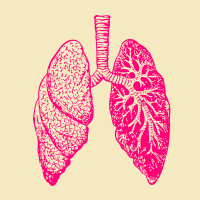
And with each exhale, see if you can feel that umbrella closing. Opening, closing, opening, closing. Now, feel the exhale and make the exhale just a little bit longer than the inhale. Because what your nervous system is doing right now is it is paying attention to your exhale. It is the length of the exhale that is connecting now to your nervous system. Notice if there's any slight little changes, anything, whether it's very subtle or very obvious, soften just a little bit more there. There you go. So the longer the exhale is, this is signaling to your body. We are not fighting. We are not running. We are settling.
Settle a little bit more. Take another big full breath in, fill up your lungs. Exhale a little bit longer, a little bit slower. Really focus on your exhalation. And notice what it is that you are releasing with the exhalation. Think of it as what has expired for you. Any thought formations, any ideas, any beliefs, what has expired? Feel that releasing through the exhale. And then one more time, take a big inhale. Make the exhale just a little bit longer. Bring your attention back into your body. For those of you with your eyes closed, you can slowly, on a count of three, return to the room. Wait for my count. One, two, come on back on three.
So in those moments, I see some nods, I see some tears, some smiles, some blank faces. See it all. Just feel. Because when you feel it, you are moving into the process of healing, which is then you are leading. Listen, let's be frank. Breathwork is not going to cure endometriosis, right? We need expert medical care. We need incredible doctors. We need advocacy for endometriosis, but the nervous system connection to the vagal regulation specifically is a tool that you can put into your toolbox for any single moment, any time, anywhere. And it is the longer the exhale is, the more connected you become to yourself and that power that I spoke about earlier. So when that hyper alertness, the hypervigilant sensations, the protection, the survival mechanism, when all of those come into play, there's something very simple that you can do to bring yourself back into the moment.
And that is a longer exhale. Thank you.