

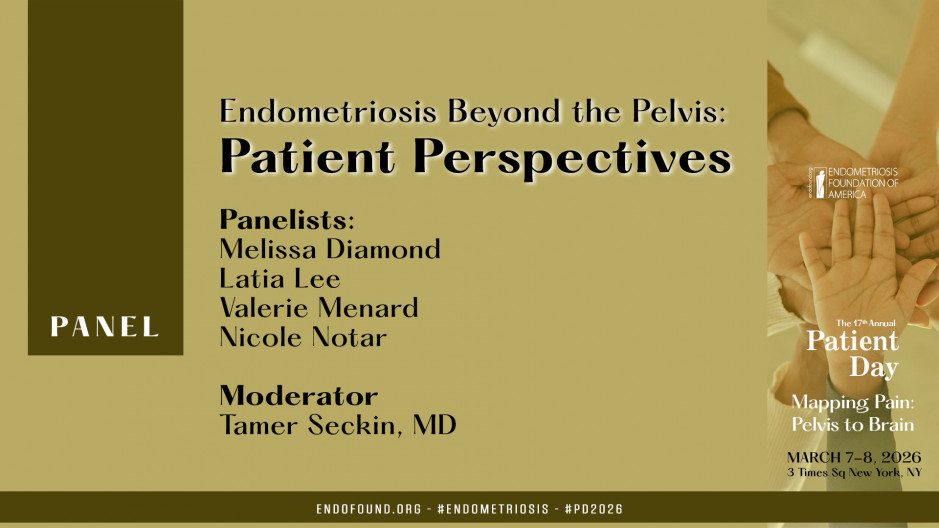
Patient Day 2026
Mapping Pain: Pelvis to Brain
March 7-8, 2026
3 Times Square, New York City
Well, congratulations previous speakers. We are all pumped up here. I'm excited to hear Dr. Meg's situation. I really didn't know that much about Mex. We know Makes, he's a well known figure, but I didn't know his white man untrocentric opinions. Yeah, that's different. See, when you bring science into politics, it's bad. He speaks in the name of science because of his doctor position. And that really stains the whole message and it's not fair. He has children too, and he's a product of women also. So that's where everything gets a little bit mixed up. But we have to believe in science. And before this, we had a conversation. The hysteria business is deeper than I'm sure you mentioned about your book and I told you what I believe in that. So anyways, this is a great panel. I happen to ... This is not stage at all.
They don't know. I'm not going to ask any questions, but I want to ask from the other end, Nicole, who I have to say I know her, but her experience, her motivation to this disease is everybody's different. Nicole, what moves you to be on this panel? I didn't pick you. You were put there. None of you, I didn't pick.
Are we on? No.
You're on.
Go ahead. Okay. Specifically, the endometriosis is full body, as I'm sure everybody in this room already knows. But our standard gynecologists don't know that. And that's why we're put from doctor to doctor to doctor. And our diagnostic timeline is from the average seven to 10 years. I feel like every day meets somebody who's 20 years or even 22 and it just keeps going up. And that's crazy because time keeps going forward as we ... Every year we should get shook in that diagnostic timeline. And I've found a huge part of that. Even when I went into surgery, I didn't realize ... I thought endometriosis was a menstrual disease. I was like, "Okay, this is going to fix my painful periods, but then I have to deal with my hormonal issues and my stomach issues and my bladder issues and my back issues." All these separate things.
That was just on a to- do list. And I woke up from surgery and they're like, "You're littered. It was everywhere." I'm like, "What do you mean? I thought it was just going to be on my ovaries." And yeah, it was seven hours. It was the whole pelvic area. And yet just learning how ... I had so much ... My mom had endometriosis, so I knew about it. I Googled everything. I went to every doctor in New York. I'm like, "How could I not know going into surgery that it's a full body disease?"
Why was your diagnostic delay in your
... Yeah.
Why were you delayed? Tell everyone.
I mean, the same reason everybody else is here at gaslighting. Our doctors are telling us that you're fine.
How many doctors have
You seen? So I had surgery at 26. I hit 55 doctors by that point. Between gastroenterologists, endocrinologists, holistic care providers, urogynecologists, mostly just gynecologist to gynecologist to gynecologist.
What kind of treatments were they subscribed to?
Medically induced menopause or sorry. Yeah, medically induced like the Lupron or the Orilisses. Really just do some yoga, relax, drink some water, make sure you're hydrated. The biggest thing with water for me was I couldn't even drink a bottle of water. So after surgery, actually, I was the most hydrated person on earth because I was just chugging bottles of water because I could and not be in stabbing abdominal pain. But that was something too that I would tell the doctor. I'm like, "It's hard for me to drink water because it hurts. I get sick. I can't drink a bottle of water out commuting to work because then I'm running to a bathroom." So that's not efficient and that makes no sense. There's clearly something going on in my body need to get to the root of it. And it was until finding an excision surgeon just by tapping out and the whole insurance thing.
I don't want to get into that. But yeah, I'm sorry, what was the initial question? I just kind of went off of it.
Well, the initial question is coming to why were you delayed in your opinion? Yeah, medical gaslight. You saw what surprised you the most? What had the most impact in your delay?
The lack of knowledge from other providers that endometriosis is full body, that it needs to be excised from your body, and that that's the gold standard is excision surgery.
That's your validation now. Yeah. And we'll come back to how you feel later. Who wants to talk next? Melissa, maybe we should talk to you. Tell me your experience with delay and what is the turning point, infliction point in your life?
Yeah. It took me 20 years before I met Dr. Sedgkin and had surgery. I had pain and issues from the time I was 12 years old and had a sister moved when I was a freshman in high school and was put on birth control for 16 years. And during that time, a lot of the symptoms were masked for me. And it wasn't until I got off the pill when I was, I think like 27 or 28 where I had debilitating pain and a horrible stomach. And I went to different doctors, different gynecologists who I said to them, "Could I have PCOS? Could I have endo?" And they said, "No, you don't have the glaring symptoms." And they would push birth control back on me. And my gastroenterologist found IBS, right? There was no one that connected the dots. I had back surgery because of nerve pain, right?
And it took me so long for- Explain
What wet surgery is. They may not know what batch surgery is.
Yeah. I had a microdiscectomy, and so I had shooting pain down my right leg for about a year. And I mean, a lot of it was due to nerve pain, but I still to this day have back pain. And I had surgery last October. And so I think there's just a disconnect in the medical community about endometriosis. I've spoken with friends that are in the medical community, and this is a topic that's kind of glazed over in med school. And so I was so angry at all these doctors. I went out and was trying to get people fired. I was so pissed. And it wasn't until I realized that they're not bad, they just don't know. And that's the problem for me. And after ER visits back to back this last summer, I finally had a doctor come up to me and she said, "I think you have endometriosis and we can't treat you here in the ER.
We can't diagnose it, so you have to go see someone else." And so it took me a really long time to get to this point. And it was very challenging finally getting that diagnosis and knowing that all along I wasn't crazy. It was real what I was experiencing. And I said when I woke up from surgery, I have two choices. I can be a victim and feel sorry for myself, or I can use my voice to get my story out there and hopefully help people learn how to advocate for themselves because we go to doctors, we expect for doctors to care for us and we trust doctors, right? And I'm not saying that all doctors are created equal, but if you know something is wrong and a doctor is telling you you're wrong, you should not take no for an answer. You need to be loud and you need to continue to pursue care for yourself.
So these two women have said something in common. I'm going to ask both of you first question. So in your recovery, the way you felt better in your recovery, what is more powerful, the way your body felt or your validation? Go ahead, Nicole.
I mean, obviously feeling better, but the validation, I call it the power of the pathology report. I always thought, well, I probably have endometriosis. I don't know, but that's like, I'm sorry I'm canceling plans again. Losing friendships, relationships, all those things as everybody knows here. But yeah, that validation of like, I have it. And I went back to my school nurses at my high school nurse's office. I went back to those guidance counselors. I went back to a handful of the gynecologists that I went to a handful a bunch of times, just made appointments and just sat there and I'm like, I pretended that I was going for mental health.
What
Was the
Father of the pathology?
Throwing it in their face. I mean, you were wrong and please learn from this.
How many lesion was the power? How do you-
73.
That says it.
73.
And how about in your case?
I mean, the validation- I mean, I was down bad. I was in so much pain from endo. And I didn't immediately feel better. I think you remember I had an IUD that had to be removed also. I was in a lot of pain post-op. I did send my pathology report to the gynecologist that I saw a few months earlier who I showed up to her office looking seven months pregnant and in tears and she said, "You got to go back on birth control. Even if you have endo, you need to go on birth control." That's what we would do no matter what. And so I sent this report and nothing happened to her, of course. But the physical elements, my boyfriend's here and he can attest, I was a shell of myself. I was in so much pain for so long and feeling physically better is such a game changer because it affects your mental health when you're in physical pain.
But finally, knowing I was not crazy all along, I was right. I can't say it was this good feeling at first. I was pissed off. I was so angry when I got diagnosed. And so it's taken time for me to truly feel validated, but I can tell you that the pain I experienced from this disease, I'm very fortunate that I do feel better and that is all I ever wanted, right?
That's nice to hear. I think I will also ask Valerie, coming from Canada, tell me your story so you could be as open as you want.
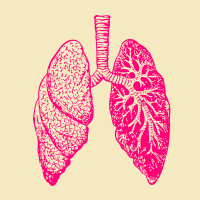
Okay. Well, just to put things in perspective, like a year ago, I didn't know I had endometriosis. I never really heard about it. It was something I sort of overheard of friends trying to get pregnant and like the term kind of came along those subjects. And I can tell a bit about my diagnosis, how it happened. There is a lung disease running in my family, pulmonary fibrosis, and I'm being screened preventively by a research institute in Montreal. And doing the lung scan, they realized that one of my kidneys was in hydronephrosis, so my kidney was all blown up, which triggered a bunch of other tests, months of testing, eventually ended up in gynecology thinking I might have cancer, this and that, whatever. So it took a very long time to finally get an MRI and then gave me my diagnosis that I had stage four, very advanced endometriosis, and I was about to lose my kidney.
So when they actually told me the past maybe 30 years of my life started kind of making sense because I had all these issues during my life as a woman, difficulty with my period and a lot of pain, just having different health issues. So when I finally got my diagnosis, it was like a kind of a relief, but that relief was sort of short lived because then they told me, "Well, you're going to go into menopause soon, so we're not going to do much about it. We'll try to fix the kidney and then you're just going to kind of live with it. " And at this point, I just realized that I had a feeling that wasn't the right answer. And I started doing research, found women's groups and started reading medical papers that I didn't really understand, but I tried to get as much information as possible.
And eventually I switched doctors and found a team that was going to operate on me and not only save my kidney, but also repair me from inside, I guess. And that's where I am.
In your experience, what symptoms, you had multiorgan symptoms which you thought normal probably. Am I right or wrong? Or you never felt anything? You lost your kidney, you didn't know about it almost.
Yes. That's something I think we can talk about is that at some point in my life, I was in tremendous, tremendous pain during my period. After that, I was lucky. I had two pregnancies back to back, had no real issues getting pregnant. And then the pain sort of went away and I didn't feel that much pain anymore kind of as if my brain sort of adapted to it. I don't know. It kind of tuned itself down. And I would like to say that my pain became fatigue and the pain became just my body being constantly exhausted. And so I often say my pain was fatigued and it still is a little bit. I feel like it's getting better. So as far as bowel maybe symptoms, it were there, but I thought it was just kind of like normal stuff as far as kidney. I had some kidney flareups, but I thought maybe it was, I don't know, like UTIs or other things.
There's such subtle, I don't know if I say this correctly, but symptoms that it was always kind of brushed off that's something else, but it turns out it was much bigger than I thought.
So the element of normalization of pain is some sort of pressure that comes from the environment we come from also. So in her case, transference of that period pain, that agony transferred into complete tiredness and the body reads it differently. I mean, we are incredible creatures. We even treat internally ourselves, but in the end, there's a point we are against the wall and that's how she's diagnosed. Unfortunately, almost ... I have patients who lost their kidneys. We know quite a few of them. So let's hear from Latia a little bit also. Latia, be open. Your story is amazing. Okay.
Hello. Okay. He's on. Hello. So-
She's a nurse, actually.
Yes. Yeah. So I had a 23 year delay in my diagnosis, had painful cycles since the age of 14. I was going put on birth control very early, was going to my gynecologist and really nothing was being done about it. They just said, "Oh, you got to go on birth control." So I always just felt I was the girl that had really hard cycles each month for a couple days, and then I just had to push through the pain. And honestly, that's what I did. I just kind of accepted that this was my fate and I didn't know. And I am a nurse and I studied in nursing school and there was nothing on endometriosis because trust me, if there was, I would have been like, "Oh my God, this is me. " So what happened was at the age of 34, woke up, my chest was tight, felt a little bit of shortness of breath.
Something said I need to go to urgent care, right? So I just went to urgent care. My vital signs were good, so my heart rate was good, my oxygen was good, and they just kind of said, "Oh, you probably just have a little bit of spasms, reconspasm. Let's just give you some steroid and a nebulizer, and then we'll send you on your way." So they were actually about to discharge me, and I said, "I don't feel better. Why are you sending me home? I actually feel worse. I feel like something is actually sitting on my chest." So they actually sent me to get a chest scan, and then the next thing I noticed a doctor in urgent care saying, "You have pneumonia, you have a right lung collapse, and you need to go to the ER now." So during that time, I had my period, didn't really make the connection at all.
I mean, I'd had some little cysts on my lungs and they said that was the cause of it. I was in a hospital for about eight days, had a lung resection, and then they did this procedure where they said, "Your lung won't collapse again anymore." So didn't think anything of it. Fast forward three years later, same thing happened, woke up from sleeping. I knew the symptoms. I was like, "My lung collapsed again." And again, it was on the second day of my cycle. So when that happened, I was like, "This is not coincidental." I kind of started Googling, saw a pulmonologist and he was actually the first person to say, "This might be endometriosis." Googled endometriosis was like, "Holy crap, this is me. This is what I've been dealing with for 23 plus years." And he said, "You need to find a specialist that could help you.
" And I just Googled a specialist and had surgery, a seven hour surgery where my lung collapsed. I had some endo on my diaphragm. I had a lung, I had a bowel resection, it was on my appendix, it was on my uterus. It was everywhere. I had five specialists, thoracic surgeon, colorectal surgeon, urologist, general surgeon, endometrial specialist there, and was in a hospital for eight days. And that was the first of many surgeries. I've had four surgeries, over 28 hours of surgery to be exact for endometriosis. So it's been a journey, and I really share my story now so that people can be aware and can advocate for themselves. I say even if I was diagnosed five years or 10 years sooner, my life will be completely different. I wouldn't have to be dealing with complications post-surgery, right? Even I'm much better now, I don't have any pain.
I'm very grateful for that, but I still deal with the residual effects of issues with my bladder, issues with my nerves that I would say if I would've known about this so much sooner, my life would be less complicated, that would be the word, right? Less complicated.
Well, time is getting tight for us. Do we have time? Where is Carolyn? So anyways, you probably go to the end of your story. What made your life the changing point in your life in the end? What the closing chapter with your gift? Other- Oh, my baby?
Tell
That.
Oh, yes. That's probably the best part of it. It was a journey. It was a four year journey to get her here. And she was actually born through egg donation, the gift of egg donation, because this endometriosis affected my ovariancer so snippetly that there was no way that I was going to be able to have a baby with my own eggs. And I was okay with it. I just wanted to be a mother and I was very appreciative of my initial fertility doctor that said, "The goal is to have a baby and for you to be able to take care of your child and not be in debilitating pain." So I just felt like if I went that route, it would just flare up my endo more. And honestly, she's the best gift in the world. I'm very thankful to have her. I know many women struggle who have endometriosis struggle with fertility and some are not able to have a child.
So I'm just thankful for that. And I'm thankful that I'm educated enough to look for those signs and symptoms. If she exhibit any of those or friends and family, they know my story. My best friends know my story. If they see some of their students in school exhibiting similar symptoms and say, "Hey, maybe you should go to the doctor and get checked out. " So that is the goal, right? Passing on the knowledge and the advocacy for the future generation so they don't have to suffer as long as we do.
Thank you. Thank you. So here I think we are witnessing two sides of the story. One is extreme endo, taking off like a difference horsepower of the disease showing you all over from sciatic to lungs, multiple bowel. They both admitted they had bowel resections. One has what's procedure, the other one. I mean, on the other hand, we have significant symptoms on both peritoneal and or first surgery all over. I don't know how many you had positive. The other one had ... Nicole had that 70s, you said, something like that. And you?
23.
23. All positive. And overall, on the way here, we're closing, other than what you have said, just each of you, Ms. Natar, let's start from that final word. What is it that makes you move forward from this point on?
Wanting to be the person that I never had for somebody who's in the same spot, especially your teenage years and you're dealing with all this for the first time. And my symptoms start when I was nine. It was before my menstrual cycle, now knowing that it's a full body disease. But yeah, that's what keeps me going in this is why it took me so long. I don't want it to take that long for anybody else.
Valerie.
What did you
Want me to say? Well, I wanted to say what you would do, your final word. What do you regret and what could you ... Or others to remember from your story?
I try not to live in regret. It's hard, but at the same time, I'm hearing a lot this morning that there's a big emotional toll to endometriosis. And I think sometimes we don't talk about it enough or maybe you don't have anybody to talk to, but this morning I've been hearing a lot of that. Just there's a lot of emotions that come before. And I guess after there's frustration, there's kind of a grief as well. There's relief. So there's a lot of emotions that I'm going through right now, just processing what happened and what's going forward. And I'm just really glad to have you guys here and find some companionship in that.
Melissa.
I don't have any regrets. I am proud of the fight that I put up and that I was relentless, which is true to my personality. I think the thing that keeps me going is that there is such an opportunity to use my voice and to change the narrative in my mind to woe is me, look what happened. It took me so long and all of this pain to, I'm not going to stop talking about this and I'm going to be loud and I am going to create change for women and children.
Latia.
Do we have any regrets? I mean, I wish it didn't take 23 years for my diagnosis.
My life definitely would have been a lot different if it didn't. But I guess this is the path that has I've been led to when I think it just ... When you think of women with endo, we think of that we're resilient, right? We bounce back and advocacy. So just like I said, sharing my story, getting the word out. I remember when I first had it, I was like blastering all over my Instagram and I met so many women through via DMs that were saying, "Oh, I think I'm exhibiting these same symptoms and just kind of reaching out. " The great thing about endometriosis is the community that you find afterwards. You have your Indo sisters and really they're the only ones who know the struggle. They get it. They get it if, "I'm sorry, I can't show up today." They understand why you can't show up today, right?
So I'm just grateful for that, grateful to be able to advocate, share my story. So women ...
So if it wasn't for you, if it wasn't for all of you, we wouldn't exist. And this foundation is for you. From the stories, you grab one important point. Early detection is key. In every case, you see 23 years versus 13 years and the time loss regrets. What can I say? The song goes like that. Always regrets, but it shouldn't be. We should learn the lesson and I appreciate you listening. Now we're going to come to doctors. I'm going to put the doctors here. Let's see, because we doctors hold the main stem of responsibility here because we are obligated to learn and transfer it to our practice and how we change, not the public. Also lawmakers, other people, our duty is education, but we can't do it without you. I think I always say this, and they quoted me, I know who they are, but they sometimes quote my things, "Revolution will come within." There will be revolution and it's coming.
It's going to change. I'm a positive guy. And I think the reason I'm positive guy because I do the biopsies positive for lesion and I believe in what I do. Just taking the lesion out. You have to take it out. Every pain represent the microcircuit to the brain. That little biopsy, the evidence-based practice. There's no evidence above that. I don't quote what a politician says. Everybody says, most important, getting the thing out and it's been validated under microscope, by a pathology and the patient sees it. That's honestly, I believe that's transparency that builds an incredible practice that sets up the care. Okay. Thank you very much for your presence and sharing your story.