

Disclaimer: The opinions shared by each of our panelists and speakers belong to each of them respectively and
may not accurately reflect the beliefs of the EndoFound organization as a whole.
Endometriosis 2026:
A Nerve-centric Disease
Medical Conference - March 6-7, 2026
3 Times Square, New York City
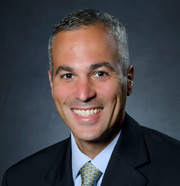
See, this is ideal for me. I have a great setup. I have a microphone in my pocket. The only thing I don't have is good thing is took that coffee. The only thing I don't have is a topic to talk to you all about because Tamir never gave me a topic. I mean, all of a sudden I find out what am I doing on the program and what am I doing on a program at eight in the morning? I mean, this is way too early for me to get started. So I had to put something together pretty quickly. And Tamir and I used to work together in New York quite a bit. And I have to tell you, and now I have a condition called CIDP that's chronic inflammatory demyelinizing polyneuropathy. And it's the loss of myelin from my nerves. But I guess I must be in a family of rare diseases because my brother just had a hospitalization yesterday or last week where they took out his thymus gland.
And he's 79 years old and he was treated when he was two years old with radiation therapy for whooping cough. So things really evolve in medicine. And our mother was a doctor and she probably ascribed to using the next best thing. And in those days, they treated whooping cough with radiation therapy. So anyway, I had a nice time in New York, but I'm from a small town in Pennsylvania where I was able to develop a lot of these procedures. And in 2006, the insurance companies finally realized that I was doing bowel surgery as a gynecologist. Now, my father was a proctologist, so I thought I was entitled. But anyway, my malpractice all of a sudden went from regular Northeastern Pennsylvania type stuff to big numbers, like $100,000. I said, "This is time to get out of New York City." And I started practicing for the next 10 years on and off in the Cayman Islands.
It's quite nice down there, but I just go in and out for short periods of time. Anyway, I put this little thing together because I got internet notice last week and it went like this.
This is probably all gynecologists got this mail. Find out which fellowship programs have the highest rating in the United States. So you click on that thing and you get an idea who's done what. So I thought, well, that's interesting. Maybe I'll click on it. So I did, and I found the place I trained, which was Boston Hospital for Women. Now it's with Mass General, and we're number four on the list. I noticed Detroit Wayne State Hospital's number one. I think some of that had to do because we started fetal surgery there. I used to come in as a guest surgeon and we did cord ligation and procedures like that there. But anyway, so I looked at the list and these are all friends of mine, and these are all residents of mine. And boy, they're pretty famous. Look at all the things they've done. So I said, "How many citations have they gotten?
How really famous?" Now, Dan Kramer has 6,000 some citations because he works in the College of Public Health and another doctor is a diabetic specialist and every paper ever published on that. And then I looked and I'm saying, "We're doing something with laparoscopy and I have 800 citations for hysterectomy." Forget it. I mean, I would never be on a list like this. So I break down these journals. I don't know very many of these journals. And I think if you're a laparoscopic surgeon, you probably don't know many of those journals because they usually would never take a laparoscopic surgical article, especially an article about endometriosis. So we went a little further. So I said, "I should write this guy a letter." So I wrote him a letter and I said, "I have additional thoughts and questions of the document you sent me. It's great to see.
Dan Kramer has 6,000 citations." And I say, "I received 400 citations for the first laparoscopic hysterectomy, and I also received 400 citations for the first liver surgery." So one day I was operating and I saw a little hemangioma on the liver and I took it out. And so everybody who writes about liver surgery and they're doing massive operations where they take out the liver or most of the liver, they always cite work. And I know nothing about liver surgery and I never will probably. Anyway, by changing hysterectomy from a one week in hospital to one day, the medical system has been saved over a billion dollars. That's probably a lot more than a billion dollars over time. So anyway, I do applaud my other residents. And we started something. We started something with hysterectomy that it rapidly progressed to gallbladder surgery, and here we are.
So I know there's a lot of talk about today, so I just wanted you to have an idea of where we stand as endometriosis surgeons. People don't even know we exist, but the people who have the disease know we exist because we fight about how to treat it. But I will honestly say that it's my belief that you can be cured of endometriosis. Dan and I will fight about that all along, but this concept that you have a disease, the whole of your rest of your life, I think that's crazy. A good surgeon in most cases can remove all of the disease, and that's it. Tamir, keep it going. Who's next? Oh, next is you're speaking next. So I better say Sanhara and thank you for this meeting and thank you for attending this meeting. I