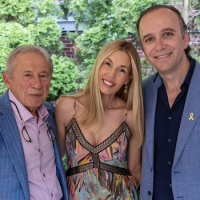



Jamie Kronstadt, 35, suffered from severe endometriosis symptoms for 20 years before having excision surgery in September near her Massachusetts home. But six hours after the hospital discharged her, she was vomiting and in agonizing pain.
“They did some tests and realized that during the surgery, they accidentally put a hole in my bowel,” Kronstadt said. “I’d have three more surgeries over the next three weeks to fix it, the last one being a colostomy in early October. I now have a colostomy bag and will for another month or two.”
Kronstadt’s endometriosis diagnosis stemmed from testing she underwent in the spring after she and her fiancé couldn’t get pregnant. Despite the setback from the surgical team’s mistake, she hopes the endometriosis surgery worked and that a baby is in her near future.
“I was going to start the IVF process six to eight weeks after the original surgery, but that’s been delayed since I had to have the other surgeries and still have to have the colostomy reversed,” Kronstadt said. “Once that’s done, doctors seem confident that I’ll be able to get pregnant.”
Kronstadt first experienced symptoms in high school, including long, heavy, and painful periods, which gynecologists repeatedly dismissed as normal. When Kronstadt was 17, a gynecologist suggested that she may have endometriosis and sent her for a scan.
“She said the scan showed that I didn’t have it, so I’d never considered endometriosis after that,” Kronstadt said. “I always hung on to what she said.”
Kronstadt’s pain lingered into college and beyond. It affected her class attendance, job, and social life. She relied heavily on ibuprofen and a heating pad to get her through.
“I had to schedule my entire adult life [before the surgery two months ago] around that one week every month,” she said. “When I’d get my period, I’d be completely debilitated and unable to get out of bed. If I were scheduling an appointment or planning a vacation, I’d have to check my calendar to see when my period would be. I was always curious how other women could just put a tampon in and go about their day.”
Last spring, after Kronstadt and her fiancé had tried unsuccessfully for eight months to get pregnant, they sought help from a fertility doctor. Though the only way to officially diagnose endometriosis is through surgery, Kronstadt said the doctor was sure from the results of an ultrasound that she had the disease.
“They could see it was pretty severe, including on my ovaries and fallopian tubes,” Kronstadt said. “They said I had to have surgery to remove it because that’s what was most likely preventing me from getting pregnant.”
Kronstadt saw an endometriosis specialist who scheduled her surgery for this month, the earliest he could get her in. But in July, Kronstadt had a flare-up unlike anything she’d ever experienced.
“My body just shut down,” she said. “I couldn’t keep food down. I vomited for a week. My stomach distended to where I looked pregnant.”
Wanting to get away from ibuprofen, Kronstadt tried medical marijuana to ease her symptoms. It helped, but she knew she couldn’t wait until November for surgery. Fortunately, her doctor was able to move it up to September. By all initial accounts, the surgery went well.
“They said they got all the endometriosis out,” Kronstadt said. “I knew going in that they were going to remove one fallopian tube, and I gave them my consent to remove the other if they had to, but they didn’t. Saving that other tube meant that I still had a chance to get pregnant naturally. I was very happy about that.”
But just hours following her discharge two days after surgery, she was back in the hospital, where they discovered the perforated bowel. She’d remain in the hospital for three more weeks during the three surgeries to fix it.
“Two of the surgeries were to try to close the hole, but neither one worked. That’s when they finally had to do the colostomy,” Kronstadt said. “I wasn’t allowed to eat or drink for a week and a half, lost 12 pounds, and was in a lot of pain during that time. I think I have a pretty high tolerance for pain because of my periods over the years, but this was excruciating on another level. It was traumatizing, and I’m still working through that.”
While the bowel surgeries and colostomy bag have diverted some of Kronstadt’s attention away from the endometriosis surgery, she is confident that her surgical team removed all of the disease. That optimism stems from how her body reacted recently over two days, when she forgot to take the birth control pills that her doctor prescribed after the surgery.
“I got my period those two days, and it was a completely different period,” Kronstadt said. “I experienced some cramping, but nothing at all like it was before. It was so much more manageable. I’m hopeful that I will have a much better quality of life.”
Kronstadt is looking forward to a fresh start after the colostomy bag is removed around the beginning of the new year. Her focus will be on starting a family with her fiancé and continuing her volunteer work with the CASA (Court Appointed Special Advocate) program in Massachusetts, where she advocates for children in foster care. She also wants to become an endometriosis advocate, a process she started today by sharing her story with EndoFound.
“I had no idea until I went through all this that one in 10 women is affected by endometriosis,” Kronstadt said. “I’ve become passionate about wanting to get involved in making this part of health education. I want schools to know about it, I want parents to know about it, and I want kids to know about it. I want girls who are experiencing such pain to feel comfortable speaking up and to know that if someone dismisses them, they need to go to someone else who will listen.”
*Patient stories submitted to EndoFound.org are the patient's views, not necessarily those of the foundation. All testimonials are from real patients, may not reflect the typical patient’s experience, and are not intended to represent or guarantee that anyone will achieve the same or similar results.