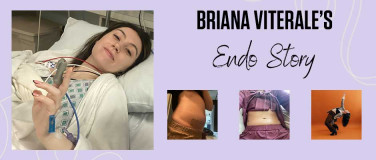


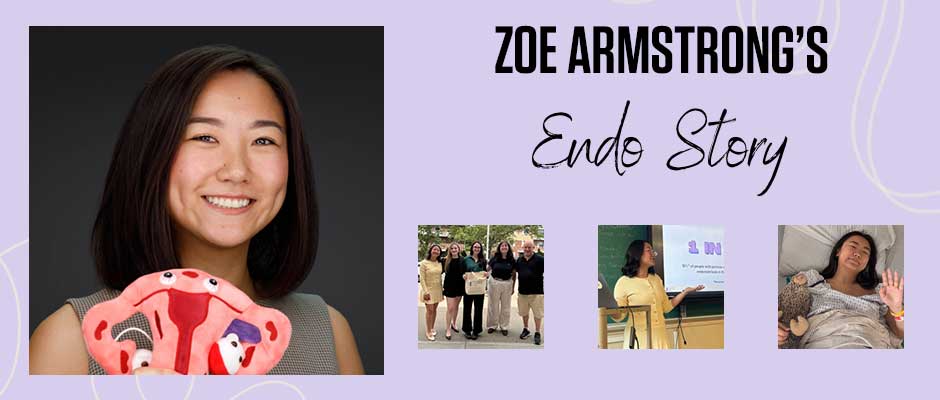
Before I was diagnosed with endometriosis, I was constantly crying on the bathroom floor during my periods, confused as to why my chronic pains were being written off without answers. I felt lonely, lost, helpless, and depressed.
Now, with a diagnosis, I feel validated and better defined as a person.
I had my first period when I was 11. It came with pain in my lower left side that doctors claimed was gas, and sciatic nerve pain that they chalked up to me being dramatic. Every month for years, I stayed home during the first two days of my period. At 15, an ovarian cyst ruptured. It happened again at 16. Both caused me to pass out and landed me in the ER. At 17, when I read about endometriosis on Facebook and told my mother, a family member (who worked at Planned Parenthood), and an OB/GYN that I thought I had it, I was told I was too young and put on birth control.
I stayed on birth control for the next decade, which gave me some semblance of a life, before coming off it to reset my body’s hormones. A few months later, at 28, another cyst ruptured. I went back on birth control for another year, but it did little to manage the pain. At 29, I had just been promoted at work and was married to my best friend, but I was having constant stabbing pains, pain with intercourse, and a strange sensation when I walked. I could feel a heavy ball swinging inside me with each step. I got an ultrasound, which revealed I had an endometrioma. The nurse who ordered it happened to be an endo warrior, and she referred me to endometriosis surgeons in New York City that she knew from the community.
Unable to walk, sit, or lie down without pain, and with the endometrioma pushing on my rectum, we rushed to freeze my embryos to preserve fertility. I followed that with laparoscopic excision surgery to remove the endometrioma, along with endometriosis that was everywhere—on my uterus, rectum, appendix, pelvic side wall, bowel, and bladder.
Today, at 31 years old and 20 years removed from the start of my symptoms, I’m finally learning how to navigate this disease and several other health issues I’ve since been diagnosed with—adenomyosis, mast cell activation syndrome (MCAS), postural orthostatic tachycardia syndrome (POTS), hypermobile ehlers-danlos syndrome (hEDS), psoriatic arthritis, premenstrual dysphoric disorder (PMDD), small intestinal bacterial overgrowth (SIBO), ADHD, psoriasis, and pubic symphysis dysfunction. I also just had a second laparoscopic surgery to repair bilateral inguinal hernias, which I was diagnosed with nine months after the endometriosis surgery. Every week is a balancing act between trying to live my life and doing continual pelvic floor therapy, acupuncture, physical therapy, shockwave therapy, pain management injections, and myofascial release therapy. But I’m doing it!
Endometriosis has given me the opportunity to reassess my life and choices, empowering me to take control of my body so that it doesn’t take control of me. It’s freeing to know everything I have, and I am thankful I was able to proactively seek diagnoses for potential comorbidities so I can continue to better serve my future self. I work with amazing doctors who are contributing to what I call “the most expensive personal training and nutrition plan I’ll ever have.”
I’ve also reassessed my goals. A successful corporate job is all I ever wanted. However, as I recover from my second laparoscopic surgery in a year, I realize that what made me successful was detrimental to my health. Punching sixty-hour work weeks, reading work emails all day and night, working and traveling across time zones, and working during PTO is not something I’m proud of. I am looking to return to work with refreshed boundaries, time baked into the day to eat, and ensuring I am not missing doctor appointments due to the guilt of leaving a meeting early.
I saw a Tumblr post in high school about the difference between being alone and being lonely. Being alone is physical, while being lonely is emotional. I’ve experienced both during my endometriosis journey. But to anyone who thinks they may have endometriosis, has been diagnosed with it, or has family or friends on the journey—you are never alone, and there is so much support out there to combat the loneliness this disease can inflict. Endometriosis impacts an estimated one in 10 women, meaning you are in the company of millions. And on social media sites like TikTok, you will find the warmest, most supportive community of women who understand symptoms, care management, and all the emotions that come with the journey.
I have learned that many women—too many—are getting hysterectomies in their early 20s for endometriosis, even though the surgery doesn’t cure the disease. Young girls are still getting ablation surgery, which makes it hard for the next surgeon to see where the original lesions were to excise them correctly. OB/GYNs perform diagnostic surgery, but stop if the case is too complex for them. It’s a heartbreaking reality to see that I was not alone in poor medical care and advice. I am indebted to the community for guiding me quite literally since my diagnosis. Without being put on this path, I would never have known that a patient can truly know more than a doctor. And now I want to help those patients find their voices and be heard.
I share my story whenever and wherever I can—through social media sites (@endoafterexcision), in endometriosis chat rooms, at rallies, with individuals I meet in dressing rooms, and through platforms such as this one. I recently had the opportunity to volunteer with the Endometriosis Foundation of America, packing materials for educators to share information and awareness about endometriosis. This hit home for me, as a daughter of a New York City public school nurse. I know my Mom wishes she could turn back time so that she could have learned about endometriosis and gotten ahead of my case, but she, too, was a victim of the lack of funding, research, and education in this space. I encourage every woman who has been diagnosed and every person touched by this disease in some way to help those still searching for answers.
I also now host endometriosis meetups with purpose in New York City. In April, we held our first fundraiser, raising $1,600 for the Endometriosis Foundation of America and Endo Excision for All. In June, we will be signing petitions and writing to our representatives to share our stories and advocate for adequate care, funding, research, education, and more.
I feel the endometriosis community is truly on the cusp of something big that will help move the needle. By sharing my story and watching other women share theirs, I can now say I will never feel lonely in my feelings of despair, anger, frustration, pain, and suffering. For that, I am eternally grateful to all my endo sisters. Please join us if you have not already!
*Patient stories submitted to EndoFound.org are the patient's views, not necessarily those of the foundation. All testimonials are from real patients, may not reflect the typical patient’s experience, and are not intended to represent or guarantee that anyone will achieve the same or similar results.