

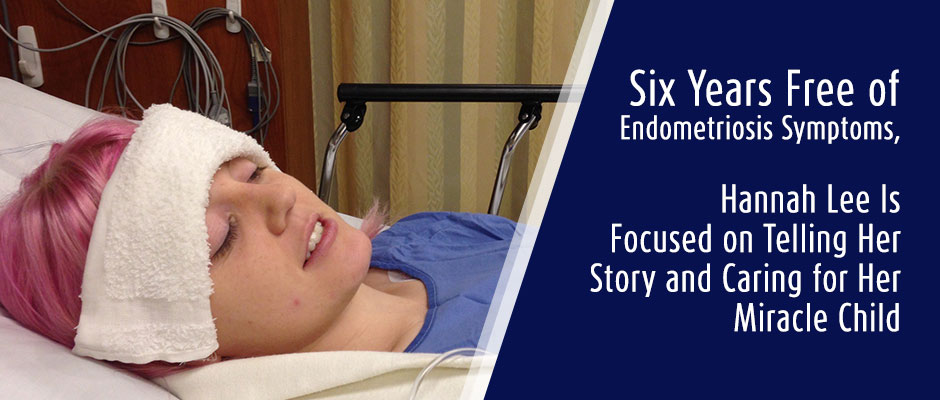
In 2019, at the age of 26, one year after having what she and her husband call “our miracle baby,” Hannah Lee had a hysterectomy to try to end years of debilitating pain. She knew there was no guarantee it would work, but felt she had no choice. She’s sharing her story about how she reached that point to educate other women so that they never have to face such a harrowing decision.
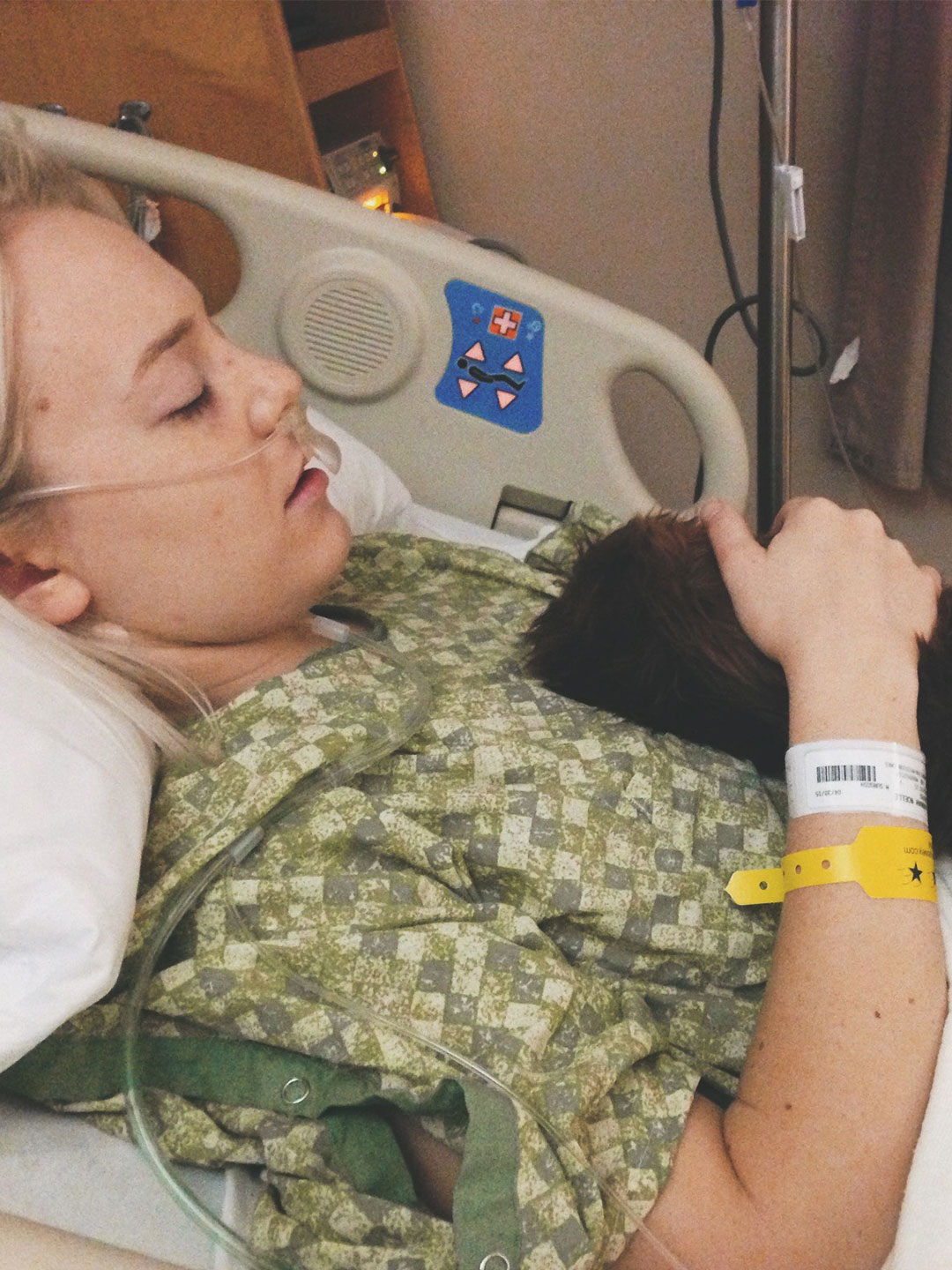
“It was awful. Really bad,” Lee said. “It hit at a time when we wanted to have more kids, but what do you do in that situation? Technically, yes, it was an elective surgery in the sense that I didn’t have to do it, but if you’re giving me the option to do something that could improve my life and my child’s life, that doesn’t feel like a choice to me.”
Lee is a stay-at-home mother and homeschool teacher in Bowling Green, Ohio, about 25 miles south of Toledo. She grew up in Orange County, California. The painful periods she started having as a young teenager were not unfamiliar to her.
“My mom always had bad periods,” Lee said. “She had my sister and me in her early 20s, and when she was 30, she got hit really hard. I have memories as a kid of her lying on the floor, crying from all the pain. By the time she got in to see a doctor who would treat her for it, her reproductive system was gone. They knew it was endometriosis and that there was no saving anything. She had a total hysterectomy on the spot.”
Studies for decades have shown that endometriosis has a significant genetic link. A recent study revealed that roughly 7 percent of first-degree relatives (mothers and sisters) of patients with endometriosis also have the disease.
Lee struggled in high school, missing classes occasionally, but the harshest symptoms hit her in college, when she had to take painkillers regularly.
“I had really bad periods—that ever-present, exhausting, everyday pain that became exponentially worse over time,” Lee said. The pain eventually became constant both during and outside of her periods.
“Even though my mom had it, all I really knew to do was tell my gynecologist that I was in a lot of pain. And when they did an exploratory laparoscopy, told me they took the endometriosis out, and then cut me loose, what was there after that if they apparently had done all that could be done?”
The exploratory laparoscopy Lee had was when she was 21, performed by her gynecologist, who recommended it based on Lee’s pain level and family history. But the method the gynecologist used was one that is not recommended by Dr. Tamer Seckin, EndoFound’s cofounder.
“She cauterized everything,” Lee said.
Cauterization uses heat to burn endometriosis on the surface of tissue. It can cause significant scar tissue and leaves behind the root of the disease, often creating more pain and other complications for the patient.
“Everything was immediately worse when I woke up. My abdomen and upper thighs were swollen and bruised, and I couldn’t stand up straight for five weeks after surgery,” Lee said. “While all of my friends were out partying, dating, and getting engaged, I was trying to get my degree while working part-time and going in and out of the hospital. My life had taken a wild turn. I was just trying to survive.”
Lee returned to her gynecologist soon after surgery and told her she was “one hundred percent worse” than before surgery.
“She said, ‘That’s not possible because you didn’t have that much endometriosis in there, and I got it all,’” Lee said. “I told her, ‘Well, I don’t know what to tell you because I can barely walk. You can believe me or not.’ And she basically washed her hands of me.”
Unsure where to turn, Lee’s pain worsened by the day.
“I tried acupuncture and all kinds of other holistic things, but nothing worked,” she said. “When things got really bad, the only thing that enabled me to function was when I could pair Toradol injections [a nonsteroidal anti-inflammatory drug] with Norco [a pain killer that contains the opioid hydrocodone]. It had become this crazy dance just to get through a day.”
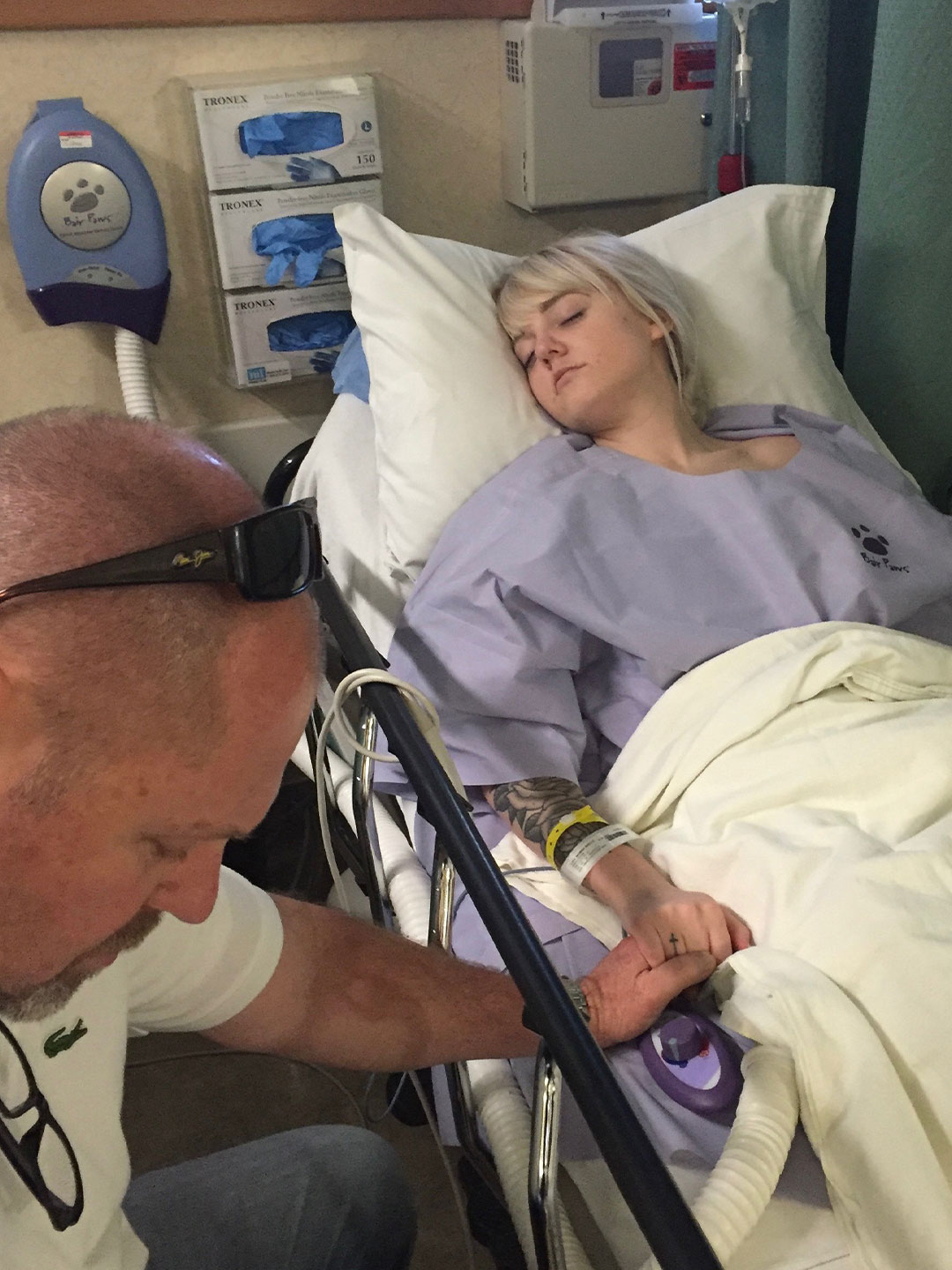
A few months later, Lee’s parents found an endometriosis specialist in Northern California. He performed excision surgery, which Dr. Seckin considers the gold standard for treating endometriosis. Lee said her surgeon told her that her insides looked like they’d been splashed with a bucket of paint. The endometriosis covered her bowels, ovaries, uterus, and bladder.
“He actually listened to me and believed me,” Lee said. Twenty-four hours after surgery, she was skipping down steps. “Suffering nonstop for so many years with endo had made me forget what it was like to not be in constant pain. That moment on the steps was me becoming reacquainted with what it was like to feel good. It was amazing, the best I’d felt in 10 months.”
Unfortunately, though, Lee wasn’t out of the woods yet. She experienced pain three months later, which required another surgery in which they removed more endometriosis from one of her ovaries. That relief lasted for about a year before the pain returned, and she had to have that same ovary removed.
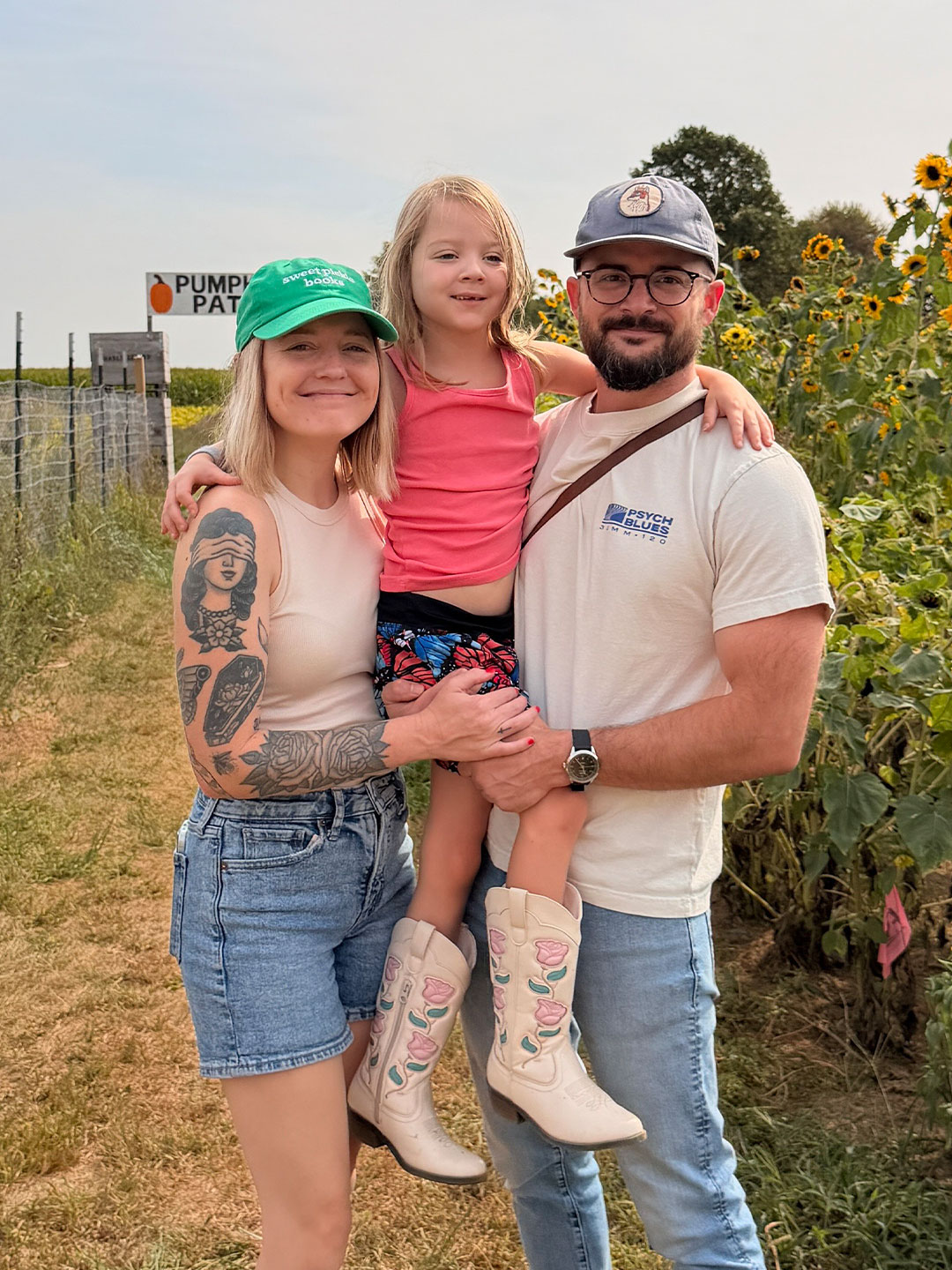
“Fast-forward another year after that, to 2018. The pain was still there, but not always. That’s when we had our miracle baby,” Lee said. “My husband and I had gotten married the year before and tried right away to have a kid because we had no idea what my body was going to do. Fortunately, the pregnancy was great, I had no bad symptoms, and the birth was easy.”
But three months after giving birth, the pain cycle resumed.
“I got slammed with two really bad periods back-to-back, and the daily pain was happening all over again,” Lee said. “I tried IUDs. I tried nerve blockers. Nothing was helping. I was in pain all the time, except this time, I had a kid, and it was affecting my ability to take care of her.”
Lee knew that a hysterectomy wasn’t necessarily going to make her pain go away, but it was a risk she was willing to take.
“I knew there was no guarantee. Endo is so vicious and doesn’t play by any rules, but I didn’t have great options,” Lee said. “It was my hope that it would work. My reproductive system had given me so much trouble, and I was so tired of trying different medications and treatments that weren’t working.”
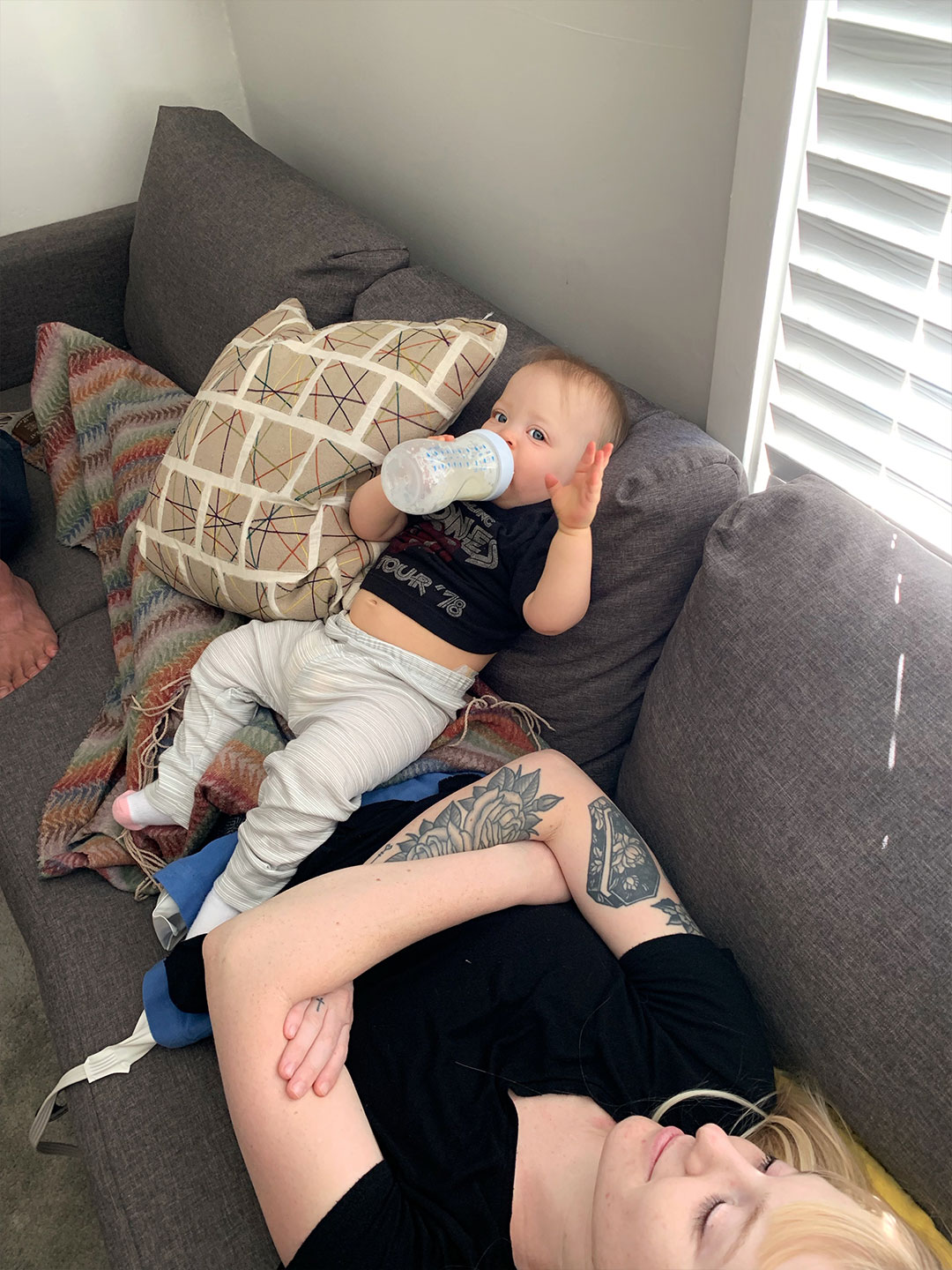
The hysterectomy took such an emotional toll on Lee that she said she mourned for three years post-surgery. However, she’s mentally in a much better place today, and physically, she has never felt better.
“The hysterectomy worked. I’ve been almost one hundred percent pain-free since, and I’m grateful that I’m able to function and have the life that I have now,” Lee said. “And as hard and crazy as my story is, I know that I’m one of the lucky ones compared to what so many women go through trying to get access to doctors who will listen and find treatments that will work for them.”
She worries about her own daughter’s future and all of the women today who don’t know where to turn.
“But all the push I’m seeing lately for these stories to be heard and for endo to be taken seriously gives me hope,” Lee said.
She wants to be part of that hope and believes sharing her story might help someone.
“Your pain is not the end of your story. There will be a day when you experience something better,” she said. “I know it’s exhausting living with endometriosis because your body is fighting so hard against itself, but keep advocating for yourself, and don’t let anyone gaslight you. Listen to yourself and remind yourself that you’re not crazy, you’re not alone, this is real, and it’s not normal. Even on a day when you’re not doing anything and just trying to survive, you’re kicking butt. Remember that what a woman with endometriosis is shouldering on a good day, let alone a horrible day—that’s super-human stuff.”