

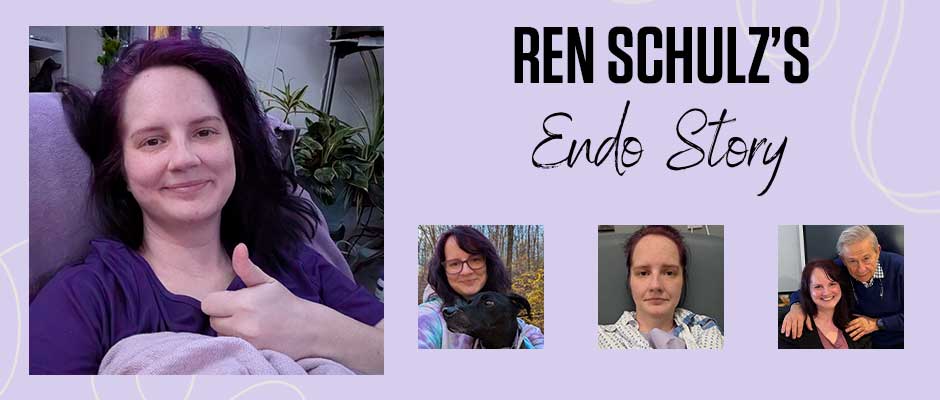
For roughly the first six years that Ren Schulz experienced debilitating pelvic pain and other symptoms, she saw the same gynecologist, hoping with each visit that she’d finally find relief.
“I started seeing her when I was a teenager, and I told her every single time about the pain. It got to the point that when she’d do the physical exam, I’d go through the roof and almost pass out,” Schulz said. “But she’d just tell me that women have pain, and I had to deal with it. When I went into her office once, struggling to even walk, I told her I was missing work because of it. Her response was, ‘Why?’”
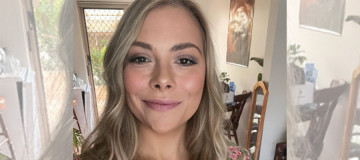
Schulz, 35, from Edison, New Jersey, is a scientist specializing in next-generation sequencing. Such a career requires rigorous coursework and training, a challenge for even the healthiest person. Schulz’s pain began in high school, was instantly off the charts, and would remain at the forefront of her life for more than 20 years.
“I missed so many days in high school because of the pain. I was keeping up mentally, but I couldn’t do anything physically,” Schulz said. “When it flared up in college, my entire body hurt, and the brain fog also really got to me. College took longer than I wanted it to.”
Along with that gynecologist, Schulz saw several other doctors during the first decade, including gastroenterologists and rheumatologists. Other than birth control, which did nothing to alleviate the pain, Schulz wasn’t offered many remedies.
“I was usually just passed off and ignored,” she said. “I was treated for chronic UTIs, but the symptoms got worse and worse. As soon as I became sexually active, that, too, was very painful. I then had years of extreme bleeding and painful bowel movements.”
One time that she wasn’t ignored was by a gastroenterologist who thought she may have endometriosis. He told her to suggest that to her gynecologist.
“My gynecologist was kind of callous to me when I brought it up,” Schulz said. “She said, ‘Well, I’ll do a diagnostic laparoscopy because we don’t know what’s going on, but it’s probably unnecessary. You should just be able to deal with the pain.’ I was out of work and bedridden at that point.”
Schulz said the gynecologist did the laparoscopy in January 2017 and found endometriosis everywhere.
“She burned a tiny bit of it out to confirm that it was endometriosis and left everything else as it was,” Schulz said. “Then she closed me up, told me that I had to go to a super specialist, didn’t help me find one, and dropped me from her practice. It was a bizarre scenario. I think she was annoyed that she found something after I’d been telling her for years that I was in pain.”
Four months later, Schulz found a surgeon who would perform excision surgery.
“She said it was a mess,” Schulz said. “By then, my bladder, uterus, and bowels were all stuck together.”
The surgery provided Schulz some relief until 2020, when she had to return to that doctor for another surgery. This second surgery wasn’t as effective as the first, and the symptoms became more widespread and intense over the next several years.
“In June [2025], I was in 10 out of 10 pain every day and completely bedridden,” Schulz said. “I was on a liquid diet, in extreme pain when going to the bathroom, rapidly losing weight, and experiencing brain fog. I was a mess.”
Her surgeon did not feel comfortable doing another surgery, given the extent to which the endometriosis had grown back, according to an MRI. The surgeon recommended Schulz to one of her colleagues, who couldn’t do surgery for about five months. Schulz couldn’t wait.
“That’s when I found Dr. Seckin,” she said.
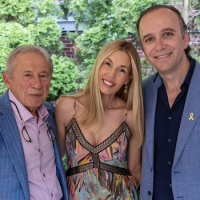
Dr. Tamer Seckin, founder of the Seckin Endometriosis Center in Manhattan, is the cofounder of EndoFound. While he performs excision surgery, which is considered the gold standard for treating endometriosis, Schulz noticed something different about him compared to her previous excision surgeon.
“He could see how rapidly I was deteriorating. This was going to be my fourth surgery overall, and he said we needed to make sure that it was my last,” Schulz said. “I’d never felt so seen. He not only recognized the pain I was in, but he knew what he could do for me. He just didn’t want to remove everything. With him, it was a discussion of what we should do and what I could keep. He moved mountains for me.”
The surgery was in September.
“They found that my left ovary was embedded in my pelvic sidewall, which is why I was in such intense pain, and I had endo splattered everywhere,” Schulz said. “It was in the area between my small and large intestine and on my rectum, bladder, and uterus. There was also a significant buildup of scar tissue.”
Schulz had a hysterectomy, which she had approved going in, though she was able to keep her ovaries. That was critical to her. She said she’s felt no disruption in her hormones and has never felt this good.
“Within four weeks post-surgery, I felt a different kind of relief than I’d ever felt,” Schulz said. “I’ve been telling people that it was like finally unclenching my jaw—but in my pelvic area—for the first time in more than 20 years. And now that I’m three months out, I’m like, ‘Wow, this is incredible! I genuinely did not know that I could have this level of functioning.’ It resolved all of my symptoms—the pain, inflammation, GI symptoms, brain fog—and I’m back to work and doing my science.”
Since her surgery, Schulz has been vocal about her journey.
“Being believed was almost impossible. I was just told to deal with the pain and thought, ‘How is that the standard?’” she said. “Since I started sharing my story, I’ve had at least a dozen friends who have been diagnosed with endometriosis. I also connected with two fellow scientists who are struggling with the same thing and don’t know what to do. How is this so prevalent and people don’t know about it? The taboo of talking about it is pretty strong.”
Schulz said her sympathy and empathy have been heightened for women who have the symptoms she had, and she will do what she can to help them avoid the suffering she experienced.
“The first thing I do is tell them that I understand and believe them, and that I know how debilitating and all-encompassing this kind of pain can be,” she said. “From there, I point them to resources and the little things that can provide relief. Beyond that, I ask them if they want to know my story and try to determine what their need is at the moment. Sometimes they just need the validation. And then usually a hug.”
*Patient stories submitted to EndoFound.org are the patient's views, not necessarily those of the foundation. All testimonials are from real patients, may not reflect the typical patient’s experience, and are not intended to represent or guarantee that anyone will achieve the same or similar results.