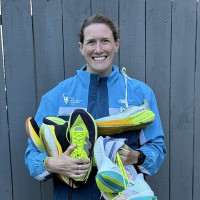


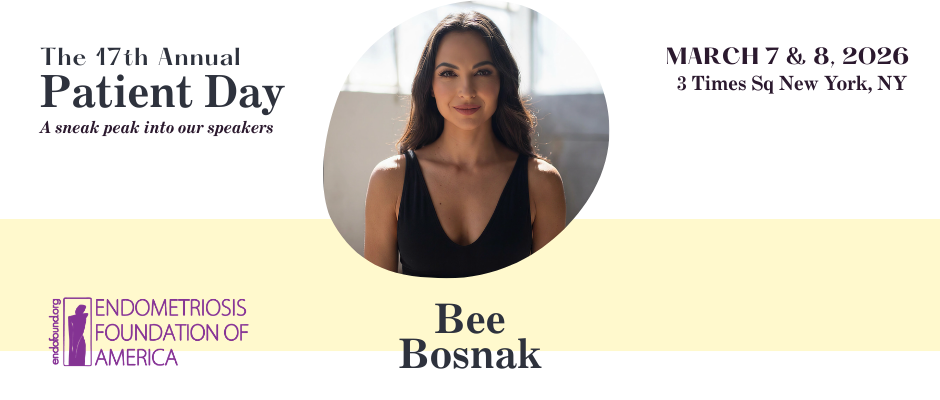
As part of our Patient Day Spotlight Series, we're delighted to spotlight Bee Bosnak, who will be leading a live session on vagal regulation on Sunday March 8th. Register for the 17th Annual Patient Day today.
What if chronic pain wasn’t just about where endometriosis lesions are located, but about a nervous system that’s been on guard for years?
At this year’s Patient Day, Bee Bosnak, founder of The Virtual Studio, will guide a workshop on nervous system regulation. Through her online practice, she blends yoga, meditation, and reflection to help the body come out of constant guard mode. Her work centers on safety, recovery, and rebuilding trust with the body.
“When pain lasts a long time, especially when it’s dismissed or takes years to diagnose, the nervous system adapts,” she says. Bee teaches simple nervous-system practices that help the body feel safer. “My work isn’t about pushing through pain or trying to override what’s happening. It’s about helping the body come out of constant guard mode,” she says. Many of her practices are short and adaptable. “They can be done seated, lying down, or on difficult days. There’s no performance, no pressure, no expectation to ‘do it right.’”
Chronic pain, she emphasizes, affects the whole system, not just one part of the body. “When the body has been in pain for years, it often learns to stay alert,” she says. Bee explains that vagal regulation is simply a way to help the nervous system stand down. “Staying on guard uses energy. It impacts sleep, stress tolerance, digestion, and recovery,” she says.
Nervous-system work doesn’t treat endometriosis directly, nor does it erase pain. “The pain may still exist, but the body doesn’t feel as constantly braced. People often feel more able to handle flare-ups, appointments, conversations, and daily stress,” Bee says.
Rather than eliminating pain, these practices expand the space around it and help the body recover from constant alert. “And recovery builds capacity. Capacity is where strength is built,” she says. “When you can influence your stress response, you regain something chronic pain often takes away: choice.”
Many people with endometriosis feel like their body has betrayed them. Bee shares that often the body has been trying to protect them the entire time. Trust, she explains, doesn’t come from forcing the body to behave. It comes from small experiences of safety. “When someone learns they can influence their breath, their heart rate, or their stress response—even slightly—something shifts.” They realize: My body isn’t against me. It’s protecting me.
Bee also acknowledges why some yoga and meditation practices may not work for everyone. “Most approaches weren’t built for bodies on guard. They assume stillness is easy. They assume quiet feels safe. They assume pain isn’t present,” she says. If a practice makes someone feel worse, it’s not a personal failure, it’s a mismatch in design. When practices are short, adaptable, and realistic, the experience changes.
If getting started with nervous-system regulation feels overwhelming, Bee recommends beginning small; for example, two or three minutes of extended exhale breathing. “The nervous system responds to consistency, not intensity. Even small shifts matter,” she says.
In her live session on Patient Day, participants can expect that same practical approach. Bee will explain how the vagus nerve supports stress recovery, then guide a simple regulation practice attendees can use immediately. “The goal isn’t to fix anything in the room,” she says, but to give you a lever you can return to when your system feels activated.
Medical care and surgical expertise are essential. Nervous-system support is another necessity, one that gives patients something active they can do for themselves. And when nervous system regulation becomes part of care, power shifts back into patients’ hands. That’s what this year’s Patient Day centers most: whole-body care that you can command.
Register for the 17th Annual Patient Day today. Tickets are $50 for each day, or $50 total for the virtual event. Patients who would also like to attend the Medical Conference on Friday, March 6, can do so for an additional $50. For more information and to register, visit www.endofound.org/patientday.