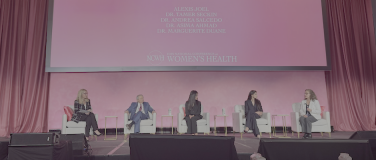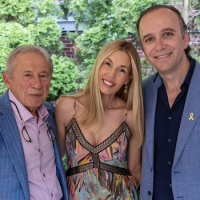



Earlier this month, I had the pleasure of attending the Endometriosis Foundation of America’s most recent Patient Day and Medical Conference, where I was blessed to receive a fountain of information from leading endometriosis experts from across the country. As both a patient and a psychotherapist myself, I especially enjoyed hearing fellow psychotherapists speak to advocacy efforts, the tenacity around this condition which so often goes overlooked, and how we must not surrender to the erasure that so often occurs due to misdiagnosis.
In my own treatment journey, it was only a few months earlier this year that I was on my way to New Jersey Medical Center, where I’d be having my endometriosis excision surgery. I’ll never forget that day in January, as I lowered the window in my Uber and let the cold air inside. My mother to the left of me, and I remember thinking about my life. What mattered most? What didn’t? Here I was about to surrender myself over to the medical-industrial complex, and I was grappling with the question of whether I had enjoyed my time on the planet up until that moment. I remember when the vehicle pulled into the lot. I remember launching myself out of the seat. What comes next is a cocktail of moments: getting in the elevator, getting off the elevator, checking into the suite, getting undressed, speaking to the anesthesiologist, and saying goodbye to my mom.
All of us remember the moment the human body's mysteries forever changed our lives, the unanswerable questions that continue to keep us up at night. But what really made my symptoms start then? Did I give myself endometriosis? Was it because I took the birth control pill? No, birth control does not cause endometriosis, but the realities of living with endometriosis often can include psychological patterns of doubt and self-blame. Though questions like these may never cease completely, we can mindfully lean into techniques and advocacy steps to quiet their noise. As a psychotherapist specializing in chronic pain, specifically pelvic pain, and as a human being who experiences pelvic pain, I know firsthand that once pain becomes part of the wallpaper of our everyday lives, most of us will do anything to find ways to reframe and re-engage how that background informs what else is possible for us in our lives. But with the right tools, you can continue to protect your mental health, advocate for your body whilst navigating the medical-industrial complex, and find re-imagined thriving amongst a soundtrack of discomfort. I find these techniques below to be helpful for both myself and my patients.
Nervous System Downregulation Techniques
Mental health spans every aspect of the human experience. In a world that already places an extreme tax on our nervous systems and abilities to safely curate containers of rest and ease, mental health and therapeutic services are often not emphasized as critical parts of our healing journey.
As a provider, I encourage all of my patients to integrate forms of enjoyable, accessible mindfulness and downregulation into their days as a means to help get the body out of the constant fight-or-flight state most chronic pain sufferers operate from. Take the time to find a provider who can help guide you through different forms of breathwork, who can offer you skills-based sessions that support ways to offer your body extra care as you navigate daily tasks, and who can create a loving oasis for you to unmask and unload. These are all deeply important parts of thriving and recovery whilst living with a chronic pain condition.
The 54321 exercise, also known as the 5, 4, 3, 2, 1 method, is a mindfulness technique that can help reduce anxiety and manage acute stress. It involves focusing on your five senses to help you anchor yourself in the present moment. Here are the steps:
1. 5 things you can see: Look around and name five things you can see. For example, you might notice a pen, a spot on the ceiling, a poster, or a plant.
2. 4 things you can touch: Focus on four things you can touch, like your hair, a pillow, or the ground.
3. 3 things you can hear: Name three things you can hear, like the ticking of a clock.
4. 2 things you can smell: Notice two things you can smell, like perfume or a snack.
5. 1 thing you can taste: Focus on one thing you can taste, like that snack.
Experimenting With Different Providers
The medical industrial complex, as many of us know, is a system deeply embedded in racism, sizeism, and ableism. For many of us who experience chronic pain, finding a provider whom we feel comfortable with and safe with is a laborious and enduring process. Providers who specialize in endometriosis can be especially difficult to come by, as most general practitioners in the OB/GYN and urology space sometimes don’t even understand the gravity of what we experience daily and how to effectively target symptoms.
As a provider myself, I recommend trying out different providers until you find one that feels the most resonant. Don’t be afraid to bring loved ones to your appointments so they can be further integrated with your care. Prepare questions you want to ask your provider ahead of your visit. If your provider says something that feels dismissive or invalidating to your particular experience of pain, don’t be afraid to say something and respectfully describe how their commentary is negatively affecting your trust and medical relationship. Take notes, ask to record, and though no experience is guaranteed to be perfect, remember that if you feel disrespected or disregarded by a medical provider, you are always entitled to say something and seek care elsewhere.
Here are examples of respectful scripts that you can use to express how a doctor's dismissive or invalidating comments are affecting your trust and medical relationship:
Patient: "Doctor, I need to share something important with you. I understand that you have a lot of experience and expertise, and I respect that. However, when you made the comment about [specific comment], it made me feel [describe the feeling, e.g., dismissed, invalidated, unheard]."
Patient: "I want to emphasize that my experience of pain is very real and affects my daily life significantly. When I feel dismissed, it makes it harder for me to trust that my concerns are being taken seriously and that we are working together towards a solution."
Patient: "It's important for me to feel heard and understood in our conversations. I believe that a strong patient-doctor relationship is built on mutual respect and trust. Can we discuss my symptoms and concerns in a way that helps both of us understand what I’m going through and how we can best address it?"
Patient: "I appreciate your time and expertise, and I am hopeful that we can find a way to communicate that ensures I feel supported and validated in this process."
Tips for Using These Scripts:
1. Stay Calm and Respectful: Keep your tone calm and respectful, even if you feel frustrated.
2. Be Specific: Mention the specific comment that was dismissive or invalidating.
3. Describe Your Feelings: Share how the comment made you feel and the impact on your trust.
4. Request Collaborative Communication: Emphasize the importance of a respectful and collaborative approach to your care.
5. Express Appreciation: Acknowledge the doctor's expertise and express hope for a positive working relationship.
This approach helps to assert your feelings and concerns without being confrontational, encouraging a constructive dialogue with your doctor.
Exploring Joy
We can often forget that pleasure and joy-bearing experiences and activities are still possible for us. Take time to remember and highlight all of the things you can do in your life, even if your relationship to the ways you have historically done them has changed. Find and discover what new pockets of play exist in your life. What foods can you still savor? What new ways of pleasure might you be able to experiment with? What is something you’ve sworn off that perhaps you can gently reintroduce back into your life in a more accessible way? Joy is often one of the biggest protective ingredients when considering a life-preserving cocktail amongst daily struggles with chronic pain.
Though the above three suggestions just briefly speak to the myriad of ways to still find purpose and meaning in a life greatly affected by physical pain, remember that an empathetic community exists, providers who deeply want to make a difference are there, and you are worthy and deserving of a joyful time on this planet while you also navigate your chronic pain.