

I got my first period when I was 13 and immediately knew something was horribly wrong. I spent the first two days of that cycle and nearly every one after it curled up in a ball, barely able to move, and nearly fainting. I passed blood clots the size of quarters. I spent countless hours in the bathtub soaking in burning hot water to dull the pain from the cramps. I took the maximum dose of ibuprofen and wrapped myself in a heating pad, hoping for even the slightest bit of relief, but to no avail.
I grew up in a rural area where healthcare was significantly limited. My childhood doctor gaslit me every time my mom or I would bring up how severe my periods were. I was told to “take more ibuprofen,” that it was normal to be in pain, and even that it was normal to feel like I was going to pass out. My iron levels were low most of my teen years because of how much blood I lost every month, but no one questioned it. I switched doctors several times, hoping the next one would have answers, but they repeatedly dismissed me.
And here was the most unbelievable part of it all:
In 2022, when I was 20, my older sister had a grapefruit-sized mass on her ovary. During surgery to remove it, doctors discovered she had endometriosis, and that mass turned out to be an endometrioma. When she went in for a second surgery to have the disease removed, they discovered she was in stage IV. It was so severe that it had spread to her diaphragm and infiltrated the layer around her heart. I took this information to my gynecologist and explained that my symptoms were similar to my sister’s—but I was told that just because she had endometriosis didn’t mean I was likely to have it (which I now know is not true). I was refused an ultrasound, told to go on birth control and take more over-the-counter pain medication, and sent home. They said there was nothing more they could do. At that point, I gave up. I was convinced that nobody would ever figure out what was wrong and that this was going to be my life.
Fast-forward to 2023. I was away at college, and my symptoms had worsened. It got so bad that one day, I couldn't get off the bathroom floor of my dorm room. My friends took me to the ER, where, remarkably, I was told it was “just cramps.” Fortunately, there was a shift change that night, and the male doctor who took over looked at me and said, “I can see you’re in severe pain. I’m going to treat you with the level of care I would if you were my wife sitting here.” That moment—one of care and compassion that I’d rarely experienced from a medical professional—reignited my mission of finding an answer for all of my pain, past and present.
I scheduled an appointment with the same doctor who performed my sister's surgery, and for the first time, I was given some hope. He suspected endometriosis, though I still had my doubts since I had been gaslit and questioned so many times by the medical system. But the day of surgery, in September 2024, I finally felt peace knowing I would soon have an answer, whatever that might be.
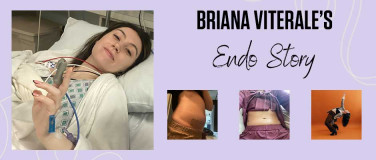
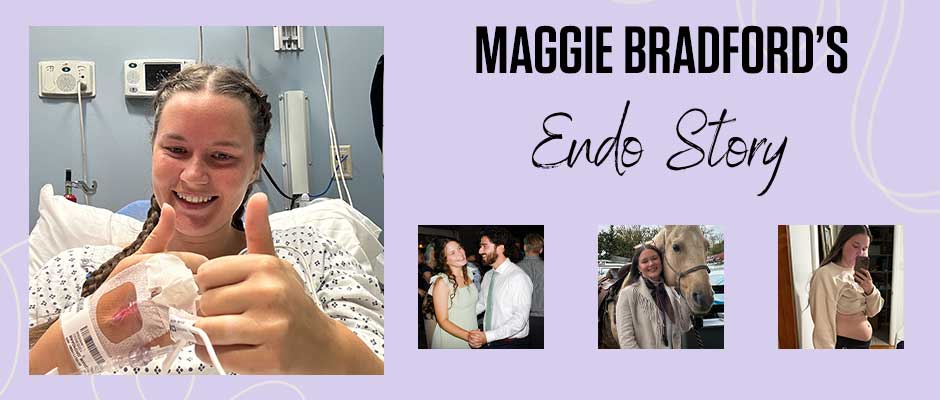
When I woke up in the Post-Anesthesia Care Unit, the nurse asked if I needed any pain meds. I didn’t. The slight pain I felt was like a walk in the park compared to what I had faced daily before. Ten minutes later, my mom came back to my room and told me the most validating news I’d heard in my life: I had adenomyosis and aggressive stage IV endometriosis that had completely adhered my uterus, colon, ureters, fallopian tubes, and pelvic side walls. It took the doctor more than four hours to free my organs and excise the lesions that had been causing me agony for years.
I’m now 24 years old, and though my recovery went well, some symptoms that are affecting my overall quality of life have reemerged, which means my journey isn’t over. Doctors recently found an ovarian cyst that they believe may be an endometrioma. That, along with my family’s history of ovarian cancer, could result in surgery to remove that ovary. I will also need a bowel resection, and with recent pain and weakness in my leg—possibly caused by endometriosis on my sacral plexus nerves—more excision surgery could be on the table. But this is endometriosis—a chronic, debilitating disease that affects both the body and mind in more ways than I can count.
As a young teen, the persistent symptoms altered how I saw myself. I had difficulty understanding why I was experiencing so much pain when my friends around me weren’t. I often had to miss school and social events because I wasn’t feeling well, and it felt like nobody understood or cared about what I was experiencing.
As I’ve grown into adulthood, endometriosis has impacted me even more. I have little sense of security, never knowing when the next flare-up will occur, when the next round of bad news will be sprung upon me, or when I will have to have another surgery with no guarantee it will make me better. Professionally, I have been misunderstood and treated differently because of how often I have to take sick days and go to appointments. I frequently feel silently judged for drawing any attention to my diagnosis, or receive unsolicited advice that feels laced with criticism. Friendships are hard because many people don’t understand what it’s like to feel fine one minute and be in excruciating pain the next. I’m also plagued with guilt stemming from the shame I feel for not being able to be there for my friends because I have to cancel plans or make other accommodations. I also struggle with depression due to the pain, and anxiety about my future as the infertility that often accompanies endometriosis potentially looms.
But as I continue to battle this disease and the effects of it, I want to help others find answers much faster than I did. I want anyone experiencing symptoms as I have for the past 11 years to know they are not crazy. For the longest time, I felt like I was going insane because no doctor believed my pain. But you know your body like nobody else, and advocating for yourself is the best way to get the answers you are searching for, no matter how dismissed you feel.
Despite all I’ve been through, I know I’m going to make it and even thrive. Life is worth living, regardless of how hard an endometriosis diagnosis is. Don't let it win. Keep fighting—you are worth fighting for every second of every day.
*Patient stories submitted to EndoFound.org are the patient's views, not necessarily those of the foundation. All testimonials are from real patients, may not reflect the typical patient’s experience, and are not intended to represent or guarantee that anyone will achieve the same or similar results.