

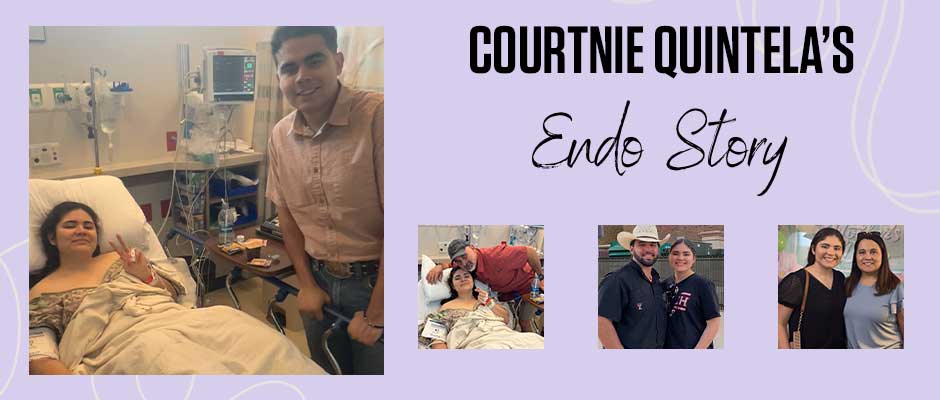
I’m sharing my endometriosis story not because it’s different from other stories you’ve read or heard about the disease, but because it’s not. Many patients face long diagnostic delays, being dismissed, and barriers to accessing excision surgery or specialized care—and the more who speak up about it, the better chance we have of creating change. I want to be another voice in supporting efforts to improve awareness, diagnosis, and equitable access to effective treatment.
My symptoms emerged early in life, starting around nine years old, with painful and heavy periods. I had cramps so severe that I often had to call my mom to pick me up early from school. Drinking tea, taking medicine, and lying on the couch became commonplace for me. I believed what I was feeling was normal.
About five years ago, when I was in my early twenties, my cycles became irregular and more unpredictable, and my condition more severe. I experienced cramping that was sometimes disabling, heavy bleeding with clots, pelvic pain, painful intercourse, fatigue, brain fog, headaches around my cycles, and occasional urinary and gastrointestinal issues.
Despite these symptoms, my concerns were initially dismissed in clinical settings. My primary care provider did not take my pain seriously, and testing that was ordered did not align with endometriosis or adenomyosis. When results came back “normal,” my symptoms were not further investigated.
I was later referred to gynecology, where imaging showed abnormalities, including a complex ovarian cyst, uterine lesions, fibroids, and an enlarged uterus. However, I was told that endometriosis was unlikely and that I might have polycystic ovary syndrome (PCOS). I was offered hormonal birth control as a primary solution, which I did not want or take, and was told that findings such as cysts or uterine changes were normal. As my condition worsened, I had to advocate for myself extensively for further evaluation and care.
My self-advocacy began in 2023. Trying to figure out what was wrong with me, I talked to my mom about her hysterectomy, which she had when she was 45 and I was a teenager. I didn’t know much about it, and it turns out, neither did she. She got her hysterectomy because of symptoms she was having, but the doctors didn’t tell her anything about what they did or what they found. She said to me, ‘Well, I can look through my paperwork to see what it says.’ When she did, she found the words “endometriosis” and “adenomyosis” and had no idea what they meant.
“Mom,” I said. “This is actually very helpful.”
Realizing I likely had the same diseases my mom had, I found a specialist who agreed that I probably had endometriosis. Unfortunately, though, she didn’t work with my insurance, and treatment was expensive. Over the next two years, I went to a couple of other specialists and underwent numerous tests. Finally, just a few weeks ago, I underwent surgery and was clinically diagnosed with endometriosis and possibly adenomyosis. They determined I was in stage III and removed endometriosis from my bowels, rectum, and vagina.
Today, I have good and bad days. I’m still recovering and need to give it time, but I’m hopeful that I’ll consistently feel better than before surgery. Sadly, nothing about this disease is a walk in the park. Endometriosis has impacted my life physically, emotionally, socially, and financially in deep and disruptive ways.
Physically, it has caused chronic and sometimes debilitating pain, fatigue, and flare-ups that interfere with my daily functioning. These symptoms have also affected my ability to maintain regular routines, including exercise, work readiness, and basic daily activities.
Emotionally, endometriosis has contributed to significant anxiety, including medical anxiety and fear surrounding appointments, testing, and being dismissed. Because my diagnosis took so many years, I often struggled with feeling invalidated or unsure of my own experiences, even though I knew something was wrong. This contributed to feelings of isolation and self-doubt.
Socially, the disease has made it difficult to maintain a consistent social life. I have missed out on family events, travel, and everyday memories. It has also impacted my relationship with my husband, particularly during flare-ups when pain makes intimacy difficult.
Financially, endometriosis has been extremely burdensome. I had to delay the care I needed by searching for another specialist after a reliable one I liked didn’t take my insurance. The cost of repeated appointments, specialist visits, imaging, medications, recovery supplies, and travel has added significant strain over time. I live in San Angelo, Texas. My specialist is in Austin, more than 200 miles away.
I want to stress to others with endometriosis symptoms that you have to learn to trust your own instincts, even when it feels difficult or exhausting. You know your body and your daily reality better than anyone. One of the most important things I’ve learned through my journey is that, unfortunately, the person who often has to advocate the hardest for your care is yourself.
Something else I would strongly recommend is keeping a detailed symptom journal. I didn’t do that but wish I had. Writing down what you experience daily—pain levels, bleeding patterns, fatigue, digestive issues, emotional changes, and how all of this affects your ability to function—can be incredibly helpful. When you bring this information into appointments, it becomes much harder for doctors to dismiss you. If you’re dismissed anyway, a journal can help you seek providers who will take you seriously.
I’ve also learned the importance of preparing for medical appointments in advance, especially if you have anxiety as I do. It helped me to write a simple script or outline before appointments so I could communicate everything I needed to say. This helped reduce the chance of forgetting something in the moment and made it easier to stay focused when speaking with doctors.
One of the hardest parts of this condition is not just the physical pain, but the emotional and mental toll of repeatedly trying to advocate for yourself in systems that do not always recognize or prioritize this disease. It can feel isolating, especially when others around you do not fully understand what you are going through. Because of this, finding even small ways to support yourself—through tracking symptoms, preparing for appointments, or connecting with others who understand—can make a meaningful difference.
Above all, if you have endometriosis, I want you to know that you are not alone, your pain is real, and your experiences are valid. Even if you are not immediately recognized or understood by others, keep fighting for yourself. It may be a long road, but someone will listen.
*Patient stories submitted to EndoFound.org are the patient's views, not necessarily those of the foundation. All testimonials are from real patients, may not reflect the typical patient’s experience, and are not intended to represent or guarantee that anyone will achieve the same or similar results.