
banner

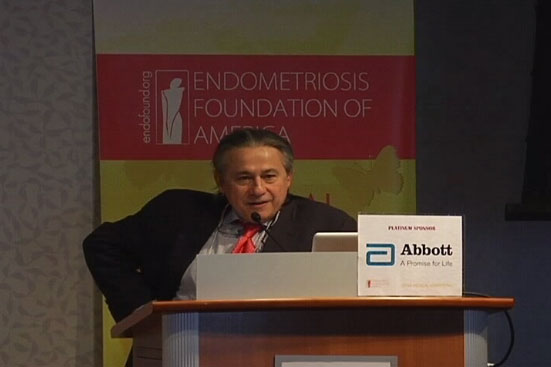
Video - Medical Conference - Tamer Seckin Presentation

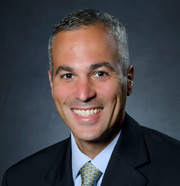
Welcome to this conference, I would like to invite the President and the Founder of the Endometriosis Foundation, Dr. Seckin to give his presentation.

<>

Thank you, Laura for your speech.  I did not know Laura before.  She’s not my patient.  We just met this morning and that’s one of those stories we always hear.  Thank you again.  Today we are starting with the early pathogenesis of endometriosis, a three dimensional modelling on a timeline.  Last night, as we were having dinner I was reminded of my age and then this morning as I was driving over Brooklyn bridge, I said why am I doing this topic, let a PhD or somebody do it!  However, as a surgeon, this is probably one of the very exciting things we get obsessed with.  Every time we look at that pelvis we see endo, we always wonder how did this thing happened and ____Audio gap_____ lesions you excise.  Seeing its results, you think there’s something here, that we really need to pay attention more because you cannot treat a disease, if you don’t understand it.  So, this is a disease, taboo, myth as Lone said enigmatic, elusive, complex which I will not spend time because we’re running out of time but it is 50-50.  It’s the awareness and education part that delays a disease and also the physician including GYN, and general physician, we also delay this disease for the patient.  We have to accept that.

So this is a period animation that’s in the early phase as estrogen and progesterone, endometrium gets thickened and it is like there is party inside the endometrium and then inflammation happens.  _______Audio gap______, they run out of the house.  It’s the house that determines though from which door everybody has to leave.  Some are in panic or whatever the reason they go from the back door.  The body usually handles these, it’s no problem every woman has this.  Whether it is it’s the doors that are relaxed, the front door may be very tight, the back doors could be very loose or the muscle contraction sequence, whatever - but we tend to think endometriosis happens to be disease of the uterus, disease of the uterus with extrauterine manifestations, disease of the period, disease of the stem cells, it’s the stem cells that goes wrong as Dr. Hugh Barber wonderfully wrote which is one of my favorite articles.  We are in the age of stem cells to looks at these lesions like this.  The glands and stroma they are proportioned with exponential stem cell, little mathematic, this defines the endo disease probably.  It’s the common denominator gland, it's the stroma that’s the bad one, numerator, is the stroma that is the killer that does the damage, it's the stroma that does the fibrosis, increasing the surface tension of the beautiful peritoneum and distorts it.

Again we see, on pathology we see this gland and stroma is the tissue that surrounds that gland.  In this one there is more stroma there is more fibrosis.  All right, I think we have to move a little bit further but these are the pictures I love to take.  It’s not so simple, it’s just – you see the white lesions behind, its not white lesion, actually there is layers of gland buried behind it.  And on the blue exam; this is I give Methylene blue to these people and I examine on their Methylene blue; it gives me great picture capability and great contrast and you see all these spots and these are probably all micro endometriomas, these happen to be micro periods for the peritoneum.  In case of ovary, it is macro period, it’s a secondary period area.  So for deep endometriosis and peritoneum is they all come may be the same disease or separate disease - but deep endometriosis is unique because of its fibrosis and involvement of rectum.

This is one of my favorite earlier slides.  This is a little gland that is caught by me and it is less than 2 millimeter.  It has been anchored to, the I can't move forward this much I guess, but basically what you see is how it is anchored to the bottom of the peritoneum.  I am showing this to show you how angio – the initial angiogenesis or the vessel contact to the peritoneum make these glands survive.  Okay, all right.  Let's move little bit faster.  Again the same thing again and the same lesions as you see it's really swimming but it's anchored to the peritoneum and three vessels, it is tied up to it and over time this becomes something like this as you see.  The surface adhesions that you see here after methylene blue you can see the contrast how these adhesions are like a sac on the sidewall, holds the water that comes.  There is like any residual period debris, endometriosis will pool on tissue, menstrual effluents will be trapped there, but more important on the left side you see the yellow area where the lesions are really buried.  So with the initial blood contact the peritoneum gets looser and opens up and leaves a filmy layer which consists of many debris with lots of nuclear material.  So, all these over the years affect the mesothelium underneath tissue.  Probably what does this is also shifts the underlying submesothelial vessel structure and we see underneath these vessels curving and { } first the vessels raise up and comes down and becomes visible from above.

What we call is epithelio-mesenchymal transformation happens probably at this stage all these tissues there with debris and the dead tissue come somewhat a transfer of epithelium into mesothelium.  I just want to give these to explain so we can understand this better.  So, as bloods come, over the years there is 400 periods in a human's life, this area constantly changing over years as the vessels, iron sinks down and this somewhat oxidative stress on these dead tissues sends signals down there most likely and this tissue has stem cells - everything in it yet all these boys left the uterus trying to and discarded on the peritoneum.  They are saying SOS.  We need help.  So, there is a lifeline that comes from below and that's probably the angiogenesis.  That extends help and these vessels are oxygenated.  I try to show this [video difficulty].  So, these once the glands are animated obviously it is there to stay, all right.  [I have to know I guess.] 

So, we tried to symbolize the greens and yellow with the stem cell activity there, right.  Subepithelial vascular changes like little spikes of vessels around there.  As you see here the subepithelial vessels as if perforating superficial peritoneum another example here.  These are all called and this is like and somehow this is where they are probably - what we probably do not understand well.  The tip of these vessels somewhat webs and formats into glandular formation, subepithelial about and these are the closest picture I have taken over the years that show this.  The same thing like a mini period that happens, like a mini gland that leads in side and over the years, this angiogenesis with this vessels forms.

All right, when we look at the pelvic sidewall, this is again retrograde animation.  It’s the widely accepted theory but this is like a micro retrograde and animation.  What happens here is the blood really is sequestered in the dependent areas and the corners and caves of the pelvic sidewall.  We have to always think that the bowels are there washing away but the residual menstrual effluent tissue hides in the caves and the side walls.  This is the animation of probably, you understand this is the endometrium.  Endometrium, happens to be the one of the most challenging maybe even at times, if it’s advanced and deeply invading much difficult than rectal endometriosis because pelvic sidewall is very complex and associated with pain to get good results in these patients are very, very difficult, it involves very serious dissection and meticulous work.

This is what endometrium looks like, you all know.  This is one more animation.  I think I have to stop with this slide.  This is harder disease really from direct closing of the cul-de-sac, we’ll show up here.  Over the years the visible aspects of the pelvis is easy but when it hides on the cul-de-sac and under the uterosacral ligament disease become very - you need to really look for it and tempt these uterosacral ligament up and over the years this turns into adhesions and rectum starts getting closed and this cul-de-sac closes.

Thank you.  I did this presentation simply because to give another look, my [  ] presented in elsewhere but this is the gap that we have.  I think animation squeezes the timeline, gives us a different look to understand these pathologies.  We don’t understand many times what scientists do, many don’t understand what surgeons do, and we don’t understand what – and medical people don’t understand both aspects of the profession.  I think this was a little helpful.  I would like to invite the next speaker.

Every effort has been made to accurately transcribe the spoken presentations contained within these videos, by an outsourced service. Despite the best of attempts, however, some portions may be inaccurately reflected. Please listen carefully to the video proceedings themselves for the precise rendering of each segment. Thank you for your understanding.

Medical Conference - Tamer Seckin Presentation

this is a disease, taboo, myth as Lone said enigmatic, elusive, complex which I will not spend time because we’re running out of time but it is 50-50. It’s the awareness and education part that delays a disease and also the physician including GYN, and general physician, we also delay this disease for the patient. We have to accept that.